×

iFour Logo

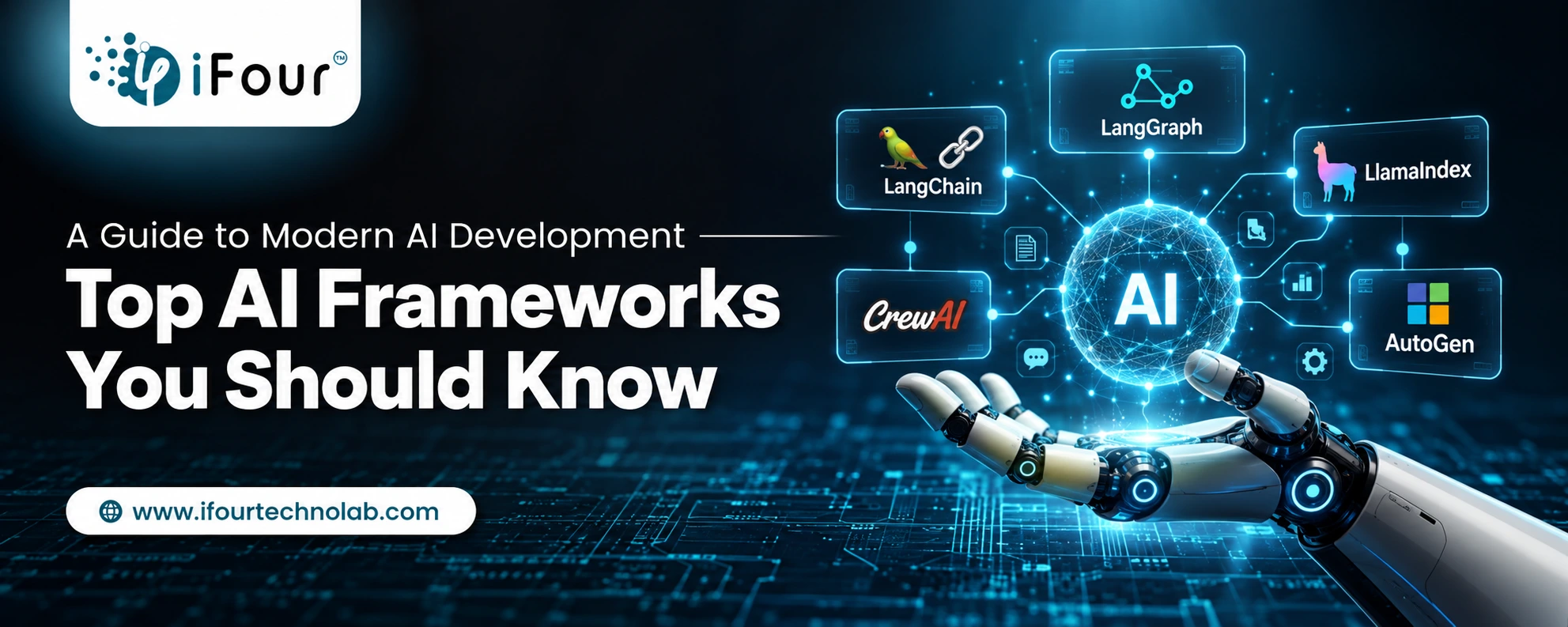
Top AI Frameworks Reddit Users are Recommending in 2026

Published: Oct 19, 2026
Updated: Oct 19, 2026

Listening is fun too.

Straighten your back and cherish with coffee - PLAY !

  • play
  • pause
  • pause

Summarize this article with:

Top AI Frameworks Reddit Users are Recommending in 2026

I keep seeing people talk about AI frameworks as if they're all competing to do the same thing.

No, they're not.

Some AI frameworks help you build and train models.

Some help you connect LLMs with your data.

Some help you build AI agents.

Others focus on running AI workloads at scale.

That's why choosing an AI framework isn't about finding the "best" one.

It's about finding the one that solves your particular problem.

So, if you're trying to understand which AI framework fits where, you're in the right place.

In this guide, we'll explore the top AI frameworks worth knowing in 2026, what they're best at, and how to choose the right one for your use case.

Understanding AI frameworks and their real-world applications

So much has changed in AI lately. But if there's one thing that has become clear to me through my work with iFour's subject matter experts, it's this: not every framework solves the same problem.

AI frameworks provide reusable tools and components for building artificial intelligence applications. They can simplify model training, data processing, retrieval, deployment, and AI workflow automation, which increases work efficiency.

Actionable solutions

Connect Agents Without Limits

Accelerate AI adoption with MCP server consulting and development

AI frameworks vs machine learning frameworks: Are they the same?

Not at all. AI is a broader term that simulates human intelligence, while machine learning is a specialized part of AI that works by learning patterns and making predictions from your big data.

Examples of AI & ML frameworks:

  • TensorFlow and PyTorch are primarily built for model development and deep learning.
  • LangChain, LlamaIndex, and Haystack focus on AI application orchestration.
  • Ray helps you scale AI workloads across distributed systems.
  • And frameworks like AutoGen and CrewAI are designed specifically for agent-based AI systems.

So, choosing the best AI framework for development, therefore, depends on your end objectives (like project scope, technical requirements, and team skills).

How We Selected These Frameworks

I recently spent some time exploring Reddit threads on AI agents and agentic AI development. What stood out were certain frameworks that kept appearing in real conversations of experts on Reddit.

From enterprise AI agents to RAG applications and multi-agent collaboration, certain frameworks have emerged as clear favorites.

So, by discussing with subject matter experts at iFour, we analyzed & selected these frameworks, filtering them out based on their primary capabilities, documentation, ecosystem, practical use cases, and suitability for development.

The list covers model development, pretrained models, RAG, distributed computing, and AI agents.

Popularity labels are qualitative indicators, not a measured ranking of the most popular AI frameworks in 2026.

Adoption varies by industry and application type.

If You Want To... Recommended Framework
Train custom AI models TensorFlow, PyTorch
Build AI assistants and copilots LangChain, Semantic Kernel
Create multi-agent systems AutoGen, CrewAI
Implement RAG and enterprise search LlamaIndex, Haystack
Scale AI across distributed infrastructure Ray
Leverage pre-trained foundation models Hugging Face Transformers
Build AI within the Microsoft ecosystem Semantic Kernel + AutoGen
Prototype AI solutions quickly LangChain + CrewAI

Top AI Frameworks Reddit Experts Are Talking About in 2026

Every few months, a new AI framework seems to grab the spotlight. Browse Reddit discussions, developer communities, or AI forums, and you'll find engineers debating whether LangGraph is replacing LangChain, if AutoGen is still the best choice for multi-agent systems, or whether CrewAI is the fastest way to get started.

The truth is, the best framework depends entirely on what you're building. To help cut through the noise, here's a look at the AI frameworks Reddit experts and practitioners are talking about most in 2026.

#1 TensorFlow for Enterprise Machine Learning

TensorFlow is one of those frameworks that almost everyone in machine learning has come across at some point. It's an open-source platform that helps developers build, train, and deploy machine learning models.

Why Is It Popular?

Many organizations choose TensorFlow because it doesn't stop at model training. It comes with an entire ecosystem designed to support real-world machine learning projects from experimentation all the way to production.

Key Features:

Model training, Keras integration, GPU acceleration, TensorBoard visualization, and deployment tools.

Use Cases of TensorFlow:

Computer vision projects, forecasting applications, recommendation engines, and edge AI solutions.

Simplify complexity

Turn Copilot Into ROI

Maximize business value with Copilot consulting services

Pros & Cons:

Its biggest strength is the mature deployment ecosystem around it. The downside is that smaller projects may not need all that power and complexity.

Who Should Use TensorFlow?

Teams that plan to move machine learning models from development into production environments.

One-line takeaway:

Choose TensorFlow when you need a proven framework with strong deployment capabilities.

#2 PyTorch for Deep Learning Innovation

PyTorch is an open-source deep learning framework that has become a favorite among AI researchers and machine learning engineers for building neural networks.

Why Is It Popular?

Developers often prefer PyTorch because it feels flexible and intuitive. That makes it easier to experiment, test ideas, and build advanced AI models.

Key Features of PyTorch:

Automatic differentiation, GPU acceleration, distributed training, and model optimization.

Best Use Cases of PyTorch:

Generative AI, NLP applications, computer vision systems, and custom deep learning models.

PyTorch - Pros & Cons:

It gives developers a lot of flexibility and control. At the same time, complex projects can require significant machine learning expertise and infrastructure.

Who Should Use PyTorch?

Researchers, AI engineers, and teams building custom AI solutions from scratch.

One-line takeaway:

PyTorch is often the first choice for teams building modern AI and deep learning applications.

#3 LangChain for LLM Application Development

Building an AI application today usually involves more than just an LLM. You may need databases, tools, APIs, and workflows working together. LangChain helps connect all those pieces.

Why Is It Popular?

Instead of building integrations from scratch, developers can use LangChain to quickly assemble applications powered by LLMs.

Key Features:

Model integrations, tool calling, retrieval, agents, and workflow orchestration.

LangChain Best Use Cases:

AI assistants, customer support applications, enterprise copilots, SQL agents, and agent-based solutions.

Pros & Cons:

It makes connecting different AI components much easier. However, for simple applications, the added abstraction can sometimes feel excessive.

Actionable solutions

Give Data Business Meaning

Build connected intelligence with Fabric Ontology consulting services

Who Should Use LangChain?

Developers building LLM-powered applications that need access to data sources, tools, or business systems.

One-line takeaway:

LangChain helps when your AI application needs to do more than just chat.

#4 Ray for Distributed AI Workloads

At some point, AI workloads become too large for a single machine. Ray is an open-source framework designed to distribute those workloads across multiple machines and resources.

Why Is Ray Popular?

As models become larger and experiments become more demanding, teams need a practical way to scale. Ray helps make that possible without completely changing how developers work.

Key Features of Ray:

Distributed execution, model training, hyperparameter tuning, and model serving.

Best Use Cases of Ray:

Large-scale model training, distributed inference, and running multiple AI experiments in parallel.

Pros & Cons of using Ray:

Its ability to scale heavy workloads is a major advantage. For smaller projects, though, it may introduce more infrastructure than necessary.

Who Should Use Ray?

Teams dealing with resource-intensive AI workloads and large-scale machine learning operations.

One-line takeaway:

Ray becomes valuable when your AI ambitions outgrow a single machine.

#5 LlamaIndex for Retrieval-Augmented Generation (RAG)

One challenge with LLMs is that they only know what they've been trained on.

But what if you want an AI application to answer questions using your company's documents, databases, or internal knowledge?

That's exactly what LlamaIndex is designed for. It helps connect AI models to external and private data sources.

What is LlamaIndex Popular?

Businesses don't just want AI that sounds smart. They want AI that understands their own information.

LlamaIndex helps bridge that gap by making company knowledge accessible to AI applications.

Key Features of LlamaIndex:

Data connectors, indexing, retrieval, RAG, and agents.

Best Use Cases of LlamaIndex:

Document assistants, enterprise knowledge search, and research applications.

Pros & Cons:

It makes data-connected AI much easier to build. However, retrieval quality still depends heavily on how well your data is prepared and organized.

Who Should Use LlamaIndex?

Teams building AI applications around documents, databases, knowledge bases, or proprietary business data.

Accelerate growth

Build Agents That Deliver

Automate complex tasks with Copilot Agent development services

One-line takeaway:

LlamaIndex shines when business knowledge is a core part of the AI experience.

#6 Haystack for AI-Powered Search and Retrieval

Not every AI application is just a chatbot.

Many firms need search systems, document retrieval, and question-answering workflows that are reliable and explainable.

Haystack was built with those use cases in mind.

Why Is Haystack Popular?

Developers like Haystack because it gives them control over how information moves through an AI application instead of hiding everything behind abstractions.

Key Features:

Retrieval, document stores, reusable components, pipelines, and agents.

Best Use Cases:

Enterprise search, document Q&A, and knowledge assistants.

Pros & Cons:

Its pipeline-based approach makes complex workflows easier to manage. The tradeoff is that advanced implementations still require thoughtful design and engineering.

Who Should Use Haystack?

Teams that want more control over AI search and RAG workflows.

One-line takeaway:

Choose Haystack when retrieval quality and workflow control are top priorities.

#7 Hugging Face Transformers for Foundation Models

Training a model from scratch sounds exciting.

Until you realize the amount of data, compute, and time it requires.

That's why many developers start with pretrained models instead, and Hugging Face Transformers gives them access to thousands of them.

Why Is Hugging Face So Popular?

Rather than reinventing the wheel, developers can build on top of models that have already been trained and tested by the broader AI community.

Key Features of Hugging Face AI:

Pretrained models, inference, fine-tuning, and support for text, vision, audio, and multimodal tasks.

Best Use Cases:

NLP, summarization, classification, and custom model adaptation.

Pros & Cons:

The model selection is incredibly broad. On the other hand, choosing the right model and optimizing it for production can still require significant expertise.

Who Should Use Hugging Face Transformers?

Developers who want to leverage existing AI models rather than build everything from scratch.

Accelerate growth

Build AI That Stands Out

Gain competitive advantage with LLM development services

Key takeaway:

Hugging Face Transformers makes state-of-the-art AI models accessible to everyday developers.

#8 AutoGen for Multi-Agent AI Systems

As AI agents became more popular, developers started asking a new question:

What if multiple agents could work together instead of one doing all the work?

AutoGen was built to explore exactly that idea.

Why AutoGen Is Popular

It introduced practical ways for AI agents to communicate, collaborate, and solve tasks together.

That made it one of the early frameworks that accelerated interest in multi-agent systems.

Key Features of AutoGen:

Multi-agent conversations, tool use, and agent orchestration.

Use Cases of AutoGen:

Existing AutoGen systems, experimental agent workflows, and collaborative AI tasks.

Pros & Cons:

Its flexibility is powerful for experimentation. However, coordinating multiple agents can quickly become difficult to manage, test, and evaluate.

Who Should Use AutoGen?

Teams maintaining AutoGen-based solutions or exploring multi-agent architectures.

Key takeaway:

AutoGen helped popularize multi-agent AI and remains relevant for many existing implementations.

#9 Semantic Kernel for Microsoft AI Solutions

Many companies already have large enterprise applications.

The challenge isn't building AI from scratch.

It's integrating AI into systems that already exist.

That's where Semantic Kernel comes in.

Why Semantic Kernel is Popular

Microsoft designed it to help developers bring AI capabilities into real business applications without rebuilding everything from the ground up.

Key Features:

Model integration, plugins, function calling, and application orchestration.

Best Use Cases:

Existing .NET applications, enterprise copilots, and Microsoft-oriented AI systems.

Pros & Cons:

It fits naturally into Microsoft-centric environments. However, teams starting new projects should also consider Microsoft's evolving agent frameworks and roadmap.

Who Should Use Semantic Kernel?

Organizations with existing Microsoft-stack applications or Semantic Kernel investments.

One-line takeaway:

Semantic Kernel remains an important bridge between enterprise applications and AI capabilities.

#10 CrewAI for Collaborative AI Agents

Think of CrewAI as assigning different employees different responsibilities.

Except those employees are AI agents.

CrewAI allows developers to create specialized agents that work together toward a shared objective.

Why CrewAI Is Popular?

The framework makes multi-agent systems easier to understand by organizing agents into clear teams, roles, and workflows.

CrewAI Key Features:

Agents, crews, tools, flows, and conditional execution.

Best Use Cases of CrewAI:

Research, report preparation, lead qualification, and business process automation.

Pros & Cons:

Its role-based approach makes agent workflows easy to follow. But adding more agents can increase both operational complexity and AI costs.

Who Should Use CrewAI?

Python development teams building collaborative AI workflows and agent-driven automation.

One-line takeaway:

CrewAI works best when multiple specialized agents can outperform a single general-purpose one.

Accelerate growth

Bring AI To Microsoft 365

Increase efficiency with AI-powered Add-in development for M365

What Are the Top AI Agent Frameworks in 2026?

AI agent frameworks help developers build intelligent agents that can understand goals, reason through tasks, use tools, access data, and take actions autonomously.

Top AI Agent Frameworks that most experts acclaim on platforms like Reddit are:

1. Microsoft AutoGen - Designed for multi-agent collaboration, workflows, and enterprise AI applications.

2. LangGraph - A graph-based framework from the LangChain ecosystem for building stateful AI agents.

3. CrewAI - Enables teams of specialized AI agents to collaborate on complex tasks.

4. LangChain Agents - Provides tool calling, memory, retrieval, and workflow orchestration capabilities.

5. Semantic Kernel - Microsoft's framework for integrating AI with enterprise applications and business processes.

6. OpenAI Agents SDK - Simplifies the creation of AI agents with tool usage, handoffs, and orchestration.

7. PydanticAI - Python-native framework focused on reliability, structured outputs, and type safety.

8. LlamaIndex Agent Framework - Excels at connecting agents with enterprise data and knowledge sources.

What Are the Top Agentic AI Frameworks?

Agentic AI frameworks focus on creating autonomous systems that can plan, reason, make decisions, and execute multi-step actions with minimal human intervention.

Here's a list of the best Agentic AI frameworks most AI experts recommend on Reddit.

1. Microsoft AutoGen - Best for multi-agent reasoning and autonomous task execution.

2. LangGraph - Strong for complex agent workflows, branching logic, and long-running processes.

3. CrewAI - Ideal for role-based agent collaboration and coordinated execution.

4. Semantic Kernel - Enterprise-grade orchestration, planning, and AI workflow automation.

5. OpenAI Agents SDK - Modern framework for agent orchestration and tool integration.

6. LlamaIndex Workflows - Agentic workflows powered by enterprise knowledge and retrieval.

7. Haystack Agents - Open-source framework for retrieval-augmented and agent-based applications.

8. Amazon Bedrock Agents - Managed service for building agentic AI applications on AWS.

9. Google Agent Development Kit (ADK) - Framework for developing and managing intelligent AI agents in Google Cloud.

10. IBM watsonx Orchestrate - Enterprise-focused platform for autonomous workflow execution.

AI Agent Frameworks - When To Choose What?

Choosing the right AI framework sounds simple until you realize there are dozens of options claiming to do the same thing.

I've seen teams spend weeks evaluating frameworks only to discover they picked a tool designed for a completely different use case.

The truth is, there isn't a single "best" AI framework. The right choice depends on what you're trying to build, whether that's an enterprise AI agent, a multi-agent system, a RAG application, or a quick proof of concept. So before you start comparing features, start with the problem you're solving.

The following recommendations help you decide which AI agent to choose for what.

  • To build enterprise AI agents, choose Microsoft AutoGen, Semantic Kernel, OpenAI Agents SDK
  • To build multi-agent collaboration, choose CrewAI, AutoGen
  • For complex workflows, LangGraph is best.
  • If you are looking for RAG and enterprise knowledge - LlamaIndex, Haystack are the top recommendations
  • If you have Microsoft ecosystem projects, then go with Semantic Kernel + AutoGen
  • And for rapid prototyping, LangChain Agents and CrewAI are highly recommended.
Simplify complexity

Make AI Work Everywhere

Connect technologies with AI integration services

Factors to Consider While Choosing an AI Agent Framework

1. Project requirements: Are you training a model, building RAG, or coordinating agents?

2. Team expertise: Does your team have experience with Python, C#, or deep learning?

3. Integration needs: Can the framework connect to your models, databases, APIs, and cloud services?

4. Production readiness: Can you evaluate, monitor, secure, and scale the application?

5. Long-term cost: Consider infrastructure, maintenance, licensing, hiring, and potential migration costs.

The Most Recommended AI Frameworks on Reddit in 2026

The factors to consider when selecting an AI framework should reflect your actual workload, not a popularity ranking. To help you get more clarity, here are the AI Agent tools that most AI professionals recommend on Reddit:

Use Case or Requirement AI Tools to Consider
Deep learning PyTorch, TensorFlow
Pretrained models Hugging Face Transformers
LLM applications LangChain
Document-based RAG LlamaIndex, Haystack
Distributed AI workloads Ray
Collaborative agents CrewAI, LangChain/LangGraph
New Microsoft-oriented agent applications Microsoft Agent Framework
Python-centric development PydanticAI
Terminal-based and repository-heavy coding agents Aider & Claude Code

So, knowing which AI agent framework is best would depend on your needs and purpose.

Every business has unique AI goals. The key is implementing the right AI solutions to achieve them.

Whether you're looking to develop custom copilots, AI agents, automate business processes, or unlock insights from enterprise data, iFour can help.

Get in touch with iFour to design Azure AI solutions aligned with your company objectives.

So, that's all from this informative blog. Hope this helps you.

Best AI Frameworks for Building Intelligent Applications: Summary

Different AI frameworks solve different problems. So, if you think about how to choose an AI framework is to start with the problem you are solving.

So, if you think about how to choose an AI framework is to start with the problem you are solving.

Do not start by asking:

"Which framework is trending?"

Start by asking:

"What capabilities does my application actually require?"

In this article, we learnt the leading frameworks used in AI projects. We also looked at the best AI agent frameworks, top Agentic AI tools and which one to choose for what.

Begin your AI journey with something small, test your preferred framework against a realistic use case, and evaluate its reliability before committing to a production architecture.

Have advanced requirements for AI development? Feel free to contact iFour.

FAQs about Multi-Agent AI frameworks

1. What are the most talked-about agentic stacks in 2026?

The most trending agentic AI trends most experts discuss currently, especially on community platforms like Reddit, are:

LangGraph, AutoGen, Semantic Kernel, OpenAI Agents SDK as these frameworks collectively cover orchestration, reasoning, memory, tool usage, and enterprise integration.

2. What are the best AI frameworks for beginners?

If you're learning deep learning, start with TensorFlow and Keras or PyTorch. For LLM applications, explore LangChain. Hugging Face Transformers is useful for experimenting with pretrained models.

2. What are the most widely used AI frameworks?

PyTorch and TensorFlow are established in machine learning. Transformers is widely used for pretrained models, while LangChain, LlamaIndex, and Haystack support LLM applications and retrieval. Adoption varies by use case.

3. Which AI framework should businesses use?

Choose based on the application. Consider PyTorch or TensorFlow for custom ML, LlamaIndex or Haystack for RAG, Ray for distributed workloads, and appropriate agent frameworks for workflow automation.

4. What is the best framework for building AI applications?

There is no universal winner. LangChain, LlamaIndex, Haystack, and Microsoft Agent Framework address different application and orchestration needs. The right option depends on the required features and architecture.

5. What should businesses check before choosing a framework?

Review licensing, security, model compatibility, integrations, performance, observability, community activity, and long-term maintenance. Run a small proof of concept before making a larger investment.

6. Are AI frameworks only for large businesses?

No. Startups can use frameworks to reduce development effort, while larger enterprises may use them to standardize complex AI systems. The best choice depends on the problem's scale and requirements.

7. PyTorch vs LangChain: What are the differences?

PyTorch is primarily a deep learning framework.

LangChain is an AI application and agent framework.

A real architecture might use both.

For example:

PyTorch -> Model -> LangChain -> Business Application

Similarly:

Hugging Face Transformers -> Model -> LlamaIndex -> RAG Application

Frameworks often complement each other.

Top AI Frameworks Reddit Users are Recommending in 2026 I keep seeing people talk about AI frameworks as if they're all competing to do the same thing. No, they're not. Some AI frameworks help you build and train models. Some help you connect LLMs with your data. Some help you build AI agents. Others focus on running AI workloads at scale. That's why choosing an AI framework isn't about finding the "best" one. It's about finding the one that solves your particular problem. So, if you're trying to understand which AI framework fits where, you're in the right place. In this guide, we'll explore the top AI frameworks worth knowing in 2026, what they're best at, and how to choose the right one for your use case. Understanding AI frameworks and their real-world applications So much has changed in AI lately. But if there's one thing that has become clear to me through my work with iFour's subject matter experts, it's this: not every framework solves the same problem. AI frameworks provide reusable tools and components for building artificial intelligence applications. They can simplify model training, data processing, retrieval, deployment, and AI workflow automation, which increases work efficiency. Actionable solutions Connect Agents Without Limits Accelerate AI adoption with MCP server consulting and development Get Started Now Reach Out via LinkedIn AI frameworks vs machine learning frameworks: Are they the same? Not at all. AI is a broader term that simulates human intelligence, while machine learning is a specialized part of AI that works by learning patterns and making predictions from your big data. Examples of AI & ML frameworks: TensorFlow and PyTorch are primarily built for model development and deep learning. LangChain, LlamaIndex, and Haystack focus on AI application orchestration. Ray helps you scale AI workloads across distributed systems. And frameworks like AutoGen and CrewAI are designed specifically for agent-based AI systems. So, choosing the best AI framework for development, therefore, depends on your end objectives (like project scope, technical requirements, and team skills). How We Selected These Frameworks I recently spent some time exploring Reddit threads on AI agents and agentic AI development. What stood out were certain frameworks that kept appearing in real conversations of experts on Reddit. From enterprise AI agents to RAG applications and multi-agent collaboration, certain frameworks have emerged as clear favorites. So, by discussing with subject matter experts at iFour, we analyzed & selected these frameworks, filtering them out based on their primary capabilities, documentation, ecosystem, practical use cases, and suitability for development. The list covers model development, pretrained models, RAG, distributed computing, and AI agents. Popularity labels are qualitative indicators, not a measured ranking of the most popular AI frameworks in 2026. Adoption varies by industry and application type. If You Want To... Recommended Framework Train custom AI models TensorFlow, PyTorch Build AI assistants and copilots LangChain, Semantic Kernel Create multi-agent systems AutoGen, CrewAI Implement RAG and enterprise search LlamaIndex, Haystack Scale AI across distributed infrastructure Ray Leverage pre-trained foundation models Hugging Face Transformers Build AI within the Microsoft ecosystem Semantic Kernel + AutoGen Prototype AI solutions quickly LangChain + CrewAI Read More: Agentic AI Use Cases, Examples & Success Stories | Real-World Business Impact Top AI Frameworks Reddit Experts Are Talking About in 2026 Every few months, a new AI framework seems to grab the spotlight. Browse Reddit discussions, developer communities, or AI forums, and you'll find engineers debating whether LangGraph is replacing LangChain, if AutoGen is still the best choice for multi-agent systems, or whether CrewAI is the fastest way to get started. The truth is, the best framework depends entirely on what you're building. To help cut through the noise, here's a look at the AI frameworks Reddit experts and practitioners are talking about most in 2026. #1 TensorFlow for Enterprise Machine Learning TensorFlow is one of those frameworks that almost everyone in machine learning has come across at some point. It's an open-source platform that helps developers build, train, and deploy machine learning models. Why Is It Popular? Many organizations choose TensorFlow because it doesn't stop at model training. It comes with an entire ecosystem designed to support real-world machine learning projects from experimentation all the way to production. Key Features: Model training, Keras integration, GPU acceleration, TensorBoard visualization, and deployment tools. Use Cases of TensorFlow: Computer vision projects, forecasting applications, recommendation engines, and edge AI solutions. Simplify complexity Turn Copilot Into ROI Maximize business value with Copilot consulting services Get Started Now Reach Us on LinkedIn Pros & Cons: Its biggest strength is the mature deployment ecosystem around it. The downside is that smaller projects may not need all that power and complexity. Who Should Use TensorFlow? Teams that plan to move machine learning models from development into production environments. One-line takeaway: Choose TensorFlow when you need a proven framework with strong deployment capabilities. #2 PyTorch for Deep Learning Innovation PyTorch is an open-source deep learning framework that has become a favorite among AI researchers and machine learning engineers for building neural networks. Why Is It Popular? Developers often prefer PyTorch because it feels flexible and intuitive. That makes it easier to experiment, test ideas, and build advanced AI models. Key Features of PyTorch: Automatic differentiation, GPU acceleration, distributed training, and model optimization. Best Use Cases of PyTorch: Generative AI, NLP applications, computer vision systems, and custom deep learning models. Read More: How to Build AI Agents: Strategic Guide for CTOs PyTorch - Pros & Cons: It gives developers a lot of flexibility and control. At the same time, complex projects can require significant machine learning expertise and infrastructure. Who Should Use PyTorch? Researchers, AI engineers, and teams building custom AI solutions from scratch. One-line takeaway: PyTorch is often the first choice for teams building modern AI and deep learning applications. #3 LangChain for LLM Application Development Building an AI application today usually involves more than just an LLM. You may need databases, tools, APIs, and workflows working together. LangChain helps connect all those pieces. Why Is It Popular? Instead of building integrations from scratch, developers can use LangChain to quickly assemble applications powered by LLMs. Key Features: Model integrations, tool calling, retrieval, agents, and workflow orchestration. LangChain Best Use Cases: AI assistants, customer support applications, enterprise copilots, SQL agents, and agent-based solutions. Pros & Cons: It makes connecting different AI components much easier. However, for simple applications, the added abstraction can sometimes feel excessive. Actionable solutions Give Data Business Meaning Build connected intelligence with Fabric Ontology consulting services Get Started Now Get Support via LinkedIn Who Should Use LangChain? Developers building LLM-powered applications that need access to data sources, tools, or business systems. One-line takeaway: LangChain helps when your AI application needs to do more than just chat. #4 Ray for Distributed AI Workloads At some point, AI workloads become too large for a single machine. Ray is an open-source framework designed to distribute those workloads across multiple machines and resources. Why Is Ray Popular? As models become larger and experiments become more demanding, teams need a practical way to scale. Ray helps make that possible without completely changing how developers work. Key Features of Ray: Distributed execution, model training, hyperparameter tuning, and model serving. Best Use Cases of Ray: Large-scale model training, distributed inference, and running multiple AI experiments in parallel. Read More: 10 Business Problems You Can Solve Using Dynamics 365 AI Pros & Cons of using Ray: Its ability to scale heavy workloads is a major advantage. For smaller projects, though, it may introduce more infrastructure than necessary. Who Should Use Ray? Teams dealing with resource-intensive AI workloads and large-scale machine learning operations. One-line takeaway: Ray becomes valuable when your AI ambitions outgrow a single machine. #5 LlamaIndex for Retrieval-Augmented Generation (RAG) One challenge with LLMs is that they only know what they've been trained on. But what if you want an AI application to answer questions using your company's documents, databases, or internal knowledge? That's exactly what LlamaIndex is designed for. It helps connect AI models to external and private data sources. What is LlamaIndex Popular? Businesses don't just want AI that sounds smart. They want AI that understands their own information. LlamaIndex helps bridge that gap by making company knowledge accessible to AI applications. Key Features of LlamaIndex: Data connectors, indexing, retrieval, RAG, and agents. Best Use Cases of LlamaIndex: Document assistants, enterprise knowledge search, and research applications. Pros & Cons: It makes data-connected AI much easier to build. However, retrieval quality still depends heavily on how well your data is prepared and organized. Who Should Use LlamaIndex? Teams building AI applications around documents, databases, knowledge bases, or proprietary business data. Accelerate growth Build Agents That Deliver Automate complex tasks with Copilot Agent development services Get Started Now Let's Talk on LinkedIn One-line takeaway: LlamaIndex shines when business knowledge is a core part of the AI experience. #6 Haystack for AI-Powered Search and Retrieval Not every AI application is just a chatbot. Many firms need search systems, document retrieval, and question-answering workflows that are reliable and explainable. Haystack was built with those use cases in mind. Why Is Haystack Popular? Developers like Haystack because it gives them control over how information moves through an AI application instead of hiding everything behind abstractions. Key Features: Retrieval, document stores, reusable components, pipelines, and agents. Best Use Cases: Enterprise search, document Q&A, and knowledge assistants. Pros & Cons: Its pipeline-based approach makes complex workflows easier to manage. The tradeoff is that advanced implementations still require thoughtful design and engineering. Who Should Use Haystack? Teams that want more control over AI search and RAG workflows. One-line takeaway: Choose Haystack when retrieval quality and workflow control are top priorities. Read More: Microsoft 365 Copilot in Finance: Top 7 Use Cases #7 Hugging Face Transformers for Foundation Models Training a model from scratch sounds exciting. Until you realize the amount of data, compute, and time it requires. That's why many developers start with pretrained models instead, and Hugging Face Transformers gives them access to thousands of them. Why Is Hugging Face So Popular? Rather than reinventing the wheel, developers can build on top of models that have already been trained and tested by the broader AI community. Key Features of Hugging Face AI: Pretrained models, inference, fine-tuning, and support for text, vision, audio, and multimodal tasks. Best Use Cases: NLP, summarization, classification, and custom model adaptation. Pros & Cons: The model selection is incredibly broad. On the other hand, choosing the right model and optimizing it for production can still require significant expertise. Who Should Use Hugging Face Transformers? Developers who want to leverage existing AI models rather than build everything from scratch. Accelerate growth Build AI That Stands Out Gain competitive advantage with LLM development services Get Started Now Let's Talk on LinkedIn Key takeaway: Hugging Face Transformers makes state-of-the-art AI models accessible to everyday developers. #8 AutoGen for Multi-Agent AI Systems As AI agents became more popular, developers started asking a new question: What if multiple agents could work together instead of one doing all the work? AutoGen was built to explore exactly that idea. Why AutoGen Is Popular It introduced practical ways for AI agents to communicate, collaborate, and solve tasks together. That made it one of the early frameworks that accelerated interest in multi-agent systems. Key Features of AutoGen: Multi-agent conversations, tool use, and agent orchestration. Use Cases of AutoGen: Existing AutoGen systems, experimental agent workflows, and collaborative AI tasks. Pros & Cons: Its flexibility is powerful for experimentation. However, coordinating multiple agents can quickly become difficult to manage, test, and evaluate. Who Should Use AutoGen? Teams maintaining AutoGen-based solutions or exploring multi-agent architectures. Key takeaway: AutoGen helped popularize multi-agent AI and remains relevant for many existing implementations. Read More: AI in Legal Practice: Success Stories and Roadblocks #9 Semantic Kernel for Microsoft AI Solutions Many companies already have large enterprise applications. The challenge isn't building AI from scratch. It's integrating AI into systems that already exist. That's where Semantic Kernel comes in. Why Semantic Kernel is Popular Microsoft designed it to help developers bring AI capabilities into real business applications without rebuilding everything from the ground up. Key Features: Model integration, plugins, function calling, and application orchestration. Best Use Cases: Existing .NET applications, enterprise copilots, and Microsoft-oriented AI systems. Pros & Cons: It fits naturally into Microsoft-centric environments. However, teams starting new projects should also consider Microsoft's evolving agent frameworks and roadmap. Who Should Use Semantic Kernel? Organizations with existing Microsoft-stack applications or Semantic Kernel investments. One-line takeaway: Semantic Kernel remains an important bridge between enterprise applications and AI capabilities. #10 CrewAI for Collaborative AI Agents Think of CrewAI as assigning different employees different responsibilities. Except those employees are AI agents. CrewAI allows developers to create specialized agents that work together toward a shared objective. Why CrewAI Is Popular? The framework makes multi-agent systems easier to understand by organizing agents into clear teams, roles, and workflows. CrewAI Key Features: Agents, crews, tools, flows, and conditional execution. Best Use Cases of CrewAI: Research, report preparation, lead qualification, and business process automation. Pros & Cons: Its role-based approach makes agent workflows easy to follow. But adding more agents can increase both operational complexity and AI costs. Who Should Use CrewAI? Python development teams building collaborative AI workflows and agent-driven automation. One-line takeaway: CrewAI works best when multiple specialized agents can outperform a single general-purpose one. Accelerate growth Bring AI To Microsoft 365 Increase efficiency with AI-powered Add-in development for M365 Get Started Now Let's Talk on LinkedIn What Are the Top AI Agent Frameworks in 2026? AI agent frameworks help developers build intelligent agents that can understand goals, reason through tasks, use tools, access data, and take actions autonomously. Top AI Agent Frameworks that most experts acclaim on platforms like Reddit are: 1. Microsoft AutoGen - Designed for multi-agent collaboration, workflows, and enterprise AI applications. 2. LangGraph - A graph-based framework from the LangChain ecosystem for building stateful AI agents. 3. CrewAI - Enables teams of specialized AI agents to collaborate on complex tasks. 4. LangChain Agents - Provides tool calling, memory, retrieval, and workflow orchestration capabilities. 5. Semantic Kernel - Microsoft's framework for integrating AI with enterprise applications and business processes. 6. OpenAI Agents SDK - Simplifies the creation of AI agents with tool usage, handoffs, and orchestration. 7. PydanticAI - Python-native framework focused on reliability, structured outputs, and type safety. 8. LlamaIndex Agent Framework - Excels at connecting agents with enterprise data and knowledge sources. Read More: Supercharge Your Business with AI - 5 Practical Ways What Are the Top Agentic AI Frameworks? Agentic AI frameworks focus on creating autonomous systems that can plan, reason, make decisions, and execute multi-step actions with minimal human intervention. Here's a list of the best Agentic AI frameworks most AI experts recommend on Reddit. 1. Microsoft AutoGen - Best for multi-agent reasoning and autonomous task execution. 2. LangGraph - Strong for complex agent workflows, branching logic, and long-running processes. 3. CrewAI - Ideal for role-based agent collaboration and coordinated execution. 4. Semantic Kernel - Enterprise-grade orchestration, planning, and AI workflow automation. 5. OpenAI Agents SDK - Modern framework for agent orchestration and tool integration. 6. LlamaIndex Workflows - Agentic workflows powered by enterprise knowledge and retrieval. 7. Haystack Agents - Open-source framework for retrieval-augmented and agent-based applications. 8. Amazon Bedrock Agents - Managed service for building agentic AI applications on AWS. 9. Google Agent Development Kit (ADK) - Framework for developing and managing intelligent AI agents in Google Cloud. 10. IBM watsonx Orchestrate - Enterprise-focused platform for autonomous workflow execution. AI Agent Frameworks - When To Choose What? Choosing the right AI framework sounds simple until you realize there are dozens of options claiming to do the same thing. I've seen teams spend weeks evaluating frameworks only to discover they picked a tool designed for a completely different use case. The truth is, there isn't a single "best" AI framework. The right choice depends on what you're trying to build, whether that's an enterprise AI agent, a multi-agent system, a RAG application, or a quick proof of concept. So before you start comparing features, start with the problem you're solving. The following recommendations help you decide which AI agent to choose for what. To build enterprise AI agents, choose Microsoft AutoGen, Semantic Kernel, OpenAI Agents SDK To build multi-agent collaboration, choose CrewAI, AutoGen For complex workflows, LangGraph is best. If you are looking for RAG and enterprise knowledge - LlamaIndex, Haystack are the top recommendations If you have Microsoft ecosystem projects, then go with Semantic Kernel + AutoGen And for rapid prototyping, LangChain Agents and CrewAI are highly recommended. Simplify complexity Make AI Work Everywhere Connect technologies with AI integration services Get Started Now Let's Talk on LinkedIn Factors to Consider While Choosing an AI Agent Framework 1. Project requirements: Are you training a model, building RAG, or coordinating agents? 2. Team expertise: Does your team have experience with Python, C#, or deep learning? 3. Integration needs: Can the framework connect to your models, databases, APIs, and cloud services? 4. Production readiness: Can you evaluate, monitor, secure, and scale the application? 5. Long-term cost: Consider infrastructure, maintenance, licensing, hiring, and potential migration costs. The Most Recommended AI Frameworks on Reddit in 2026 The factors to consider when selecting an AI framework should reflect your actual workload, not a popularity ranking. To help you get more clarity, here are the AI Agent tools that most AI professionals recommend on Reddit: Use Case or Requirement AI Tools to Consider Deep learning PyTorch, TensorFlow Pretrained models Hugging Face Transformers LLM applications LangChain Document-based RAG LlamaIndex, Haystack Distributed AI workloads Ray Collaborative agents CrewAI, LangChain/LangGraph New Microsoft-oriented agent applications Microsoft Agent Framework Python-centric development PydanticAI Terminal-based and repository-heavy coding agents Aider & Claude Code So, knowing which AI agent framework is best would depend on your needs and purpose. Read More: Copilot AI for Success: Grow Faster, Save More, Stay Secure Every business has unique AI goals. The key is implementing the right AI solutions to achieve them. Whether you're looking to develop custom copilots, AI agents, automate business processes, or unlock insights from enterprise data, iFour can help. Get in touch with iFour to design Azure AI solutions aligned with your company objectives. So, that's all from this informative blog. Hope this helps you. Best AI Frameworks for Building Intelligent Applications: Summary Different AI frameworks solve different problems. So, if you think about how to choose an AI framework is to start with the problem you are solving. So, if you think about how to choose an AI framework is to start with the problem you are solving. Do not start by asking: "Which framework is trending?" Start by asking: "What capabilities does my application actually require?" In this article, we learnt the leading frameworks used in AI projects. We also looked at the best AI agent frameworks, top Agentic AI tools and which one to choose for what. Begin your AI journey with something small, test your preferred framework against a realistic use case, and evaluate its reliability before committing to a production architecture. Have advanced requirements for AI development? Feel free to contact iFour. FAQs about Multi-Agent AI frameworks 1. What are the most talked-about agentic stacks in 2026? The most trending agentic AI trends most experts discuss currently, especially on community platforms like Reddit, are: LangGraph, AutoGen, Semantic Kernel, OpenAI Agents SDK as these frameworks collectively cover orchestration, reasoning, memory, tool usage, and enterprise integration. 2. What are the best AI frameworks for beginners? If you're learning deep learning, start with TensorFlow and Keras or PyTorch. For LLM applications, explore LangChain. Hugging Face Transformers is useful for experimenting with pretrained models. 2. What are the most widely used AI frameworks? PyTorch and TensorFlow are established in machine learning. Transformers is widely used for pretrained models, while LangChain, LlamaIndex, and Haystack support LLM applications and retrieval. Adoption varies by use case. 3. Which AI framework should businesses use? Choose based on the application. Consider PyTorch or TensorFlow for custom ML, LlamaIndex or Haystack for RAG, Ray for distributed workloads, and appropriate agent frameworks for workflow automation. 4. What is the best framework for building AI applications? There is no universal winner. LangChain, LlamaIndex, Haystack, and Microsoft Agent Framework address different application and orchestration needs. The right option depends on the required features and architecture. 5. What should businesses check before choosing a framework? Review licensing, security, model compatibility, integrations, performance, observability, community activity, and long-term maintenance. Run a small proof of concept before making a larger investment. 6. Are AI frameworks only for large businesses? No. Startups can use frameworks to reduce development effort, while larger enterprises may use them to standardize complex AI systems. The best choice depends on the problem's scale and requirements. 7. PyTorch vs LangChain: What are the differences? PyTorch is primarily a deep learning framework. LangChain is an AI application and agent framework. A real architecture might use both. For example: PyTorch -> Model -> LangChain -> Business Application Similarly: Hugging Face Transformers -> Model -> LlamaIndex -> RAG Application Frameworks often complement each other.

Kapil Panchal

Kapil Panchal

A passionate Technical writer and an SEO freak working as a Content Development Manager at iFour Technolab, USA. With extensive experience in IT, Services, and Product sectors, I relish writing about Azure Cloud, Data Analytics, AI, & Workflow Automation and love sharing exceptional insights on various platforms. I believe in constant learning and am passionate about being better every day.

Build Your Agile Team

Categories

Ensure your sustainable growth with our team

Talk to our experts
Sustainable
Sustainable
 
Blog Our insights
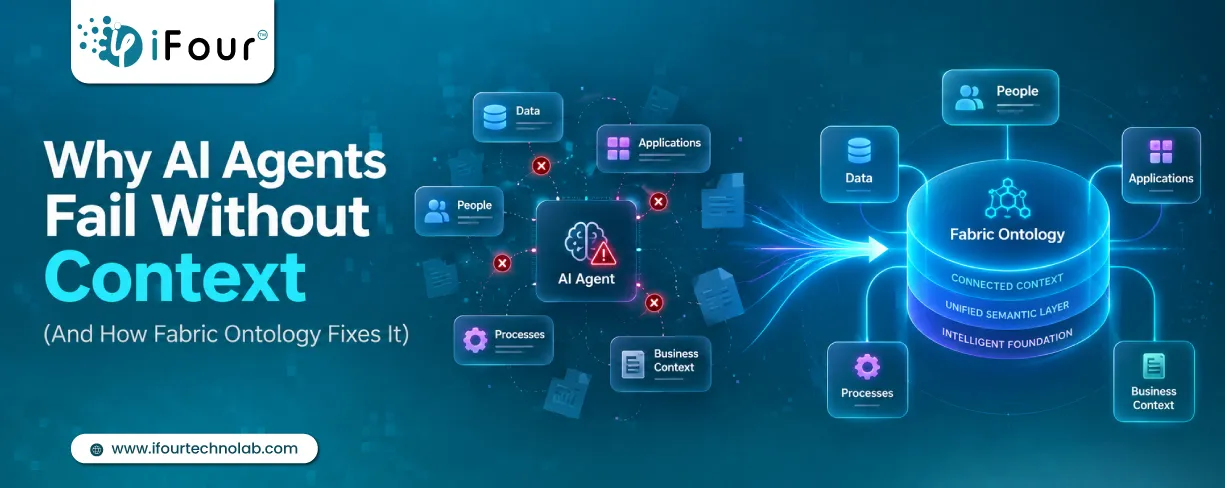
Why AI Agents Fail Without Context (And How Fabric Ontology Fixes It)

05 October 2026

Kapil Panchal

Why AI Agents Fail Without Context (And How Fabric Ontology Fixes It)

Quick Summary: AI agents don't fail because they lack intelligence. They fail because they lack business context. Enterprise data often contains information but not meaning. Fabric...

How to Build AI Agents: Strategic Guide for CTOs

31 March 2026

Kapil Panchal

How to Build AI Agents: Strategic Guide for CTOs

AI agents are everywhere these days. The world's biggest tech players - Microsoft, Alphabet, Amazon, and Meta are investing heavily in AI infrastructure, with spending expected...

Ethical AI in Healthcare: Key Considerations For Patient Safety

03 February 2026

Kapil Panchal

Ethical AI in Healthcare: Key Considerations For Patient Safety

Let’s keep it simple. In healthcare, trust, safety, and human dignity come first, no matter what solution you build. The same applies to AI. Today, it is everywhere, from clinics...