
















































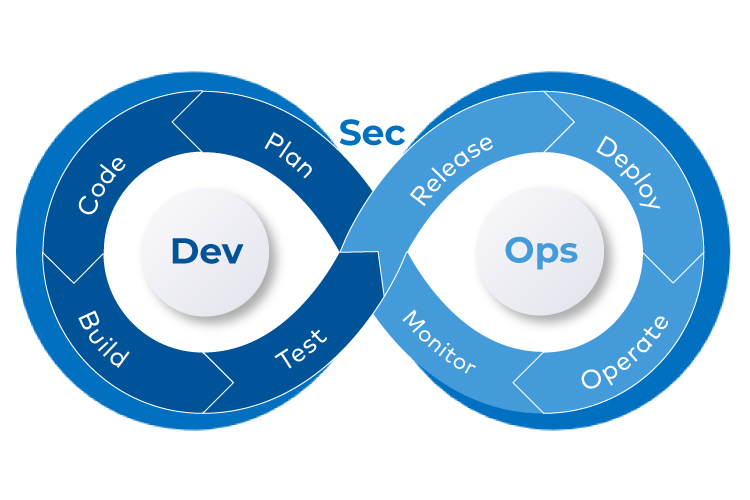













Drafting Policies and Procedures
Legal teams leverage AI to rapidly draft internal company policies, standard operating procedures (SOPs), and compliance frameworks for broader business units.


601 & 612, The Times square Arcade, Near Baghban party plot, Thaltej - Shilaj Road, Thaltej, Ahmedabad, Gujarat - 380059
Listening is fun too.
Straighten your back and cherish with coffee - PLAY !
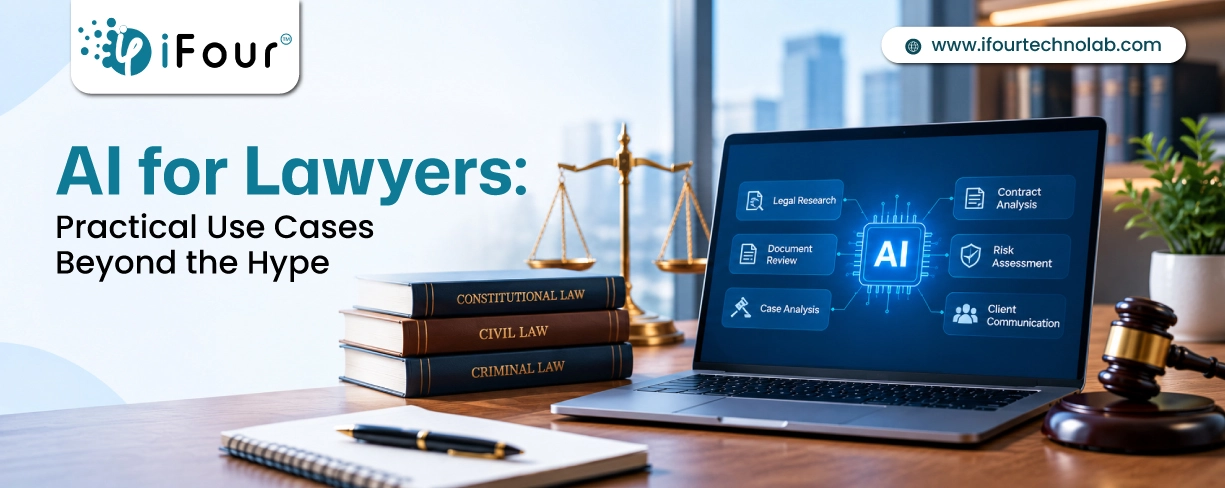
Quick Summary
Lawyers use AI to research faster, draft/review contracts, review large documents, track compliance, and automate legal workflows. However, they must verify outputs and protect client data.
AI Tools for Legal Workflows:
Research/drafting: Lexis+ AI/Protege, Westlaw, Alexi, Casetext CoCounsel
Contract workflows: LegalOn, Spellbook, Gavel, Genie AI
Practice management: Clio
General LLMs: ChatGPT (quick drafting/summaries), Claude (long-doc reasoning, privacy-focused), Harvey AI (law-firm-specific),Microsoft Copilot (Office integration)
Caution: AI doesn’t replace lawyers; it just assists. So, it is suggested to use enterprise-grade tools and firm AI policies for privacy.
“AI is not a substitute for human intelligence. It is a tool to amplify it.”
— Advocate Bhaumik Shah, CISA-certified Legal Consultant
This legal veteran highlights an important point: lawyers are moving into an era where human intuition and AI efficiency work together. Gone are the days when attorneys rely on endless manual research and paperwork. Now AI takes over this burden, helping them focus on judgment and strategy.
But "How is AI being used by lawyers?" is still a question for many individuals. Since much of the information on the web is filled with bold claims, it requires clarity.
And this comes when you hear from real lawyers about how they're incorporating AI in legal practice. Those Legal AI use cases give more value & clarity to the user's question.
And this is exactly what happened in our recent webinar "AI in legal practice".

Over 20 Practising lawyers and legal experts shared how they are currently using AI, where it delivers value, and where caution is still required.
Their collective insight on AI use cases revealed an important reality:
AI can support lawyers, but it cannot replace the responsibility, accountability, and professional reasoning that legal practitioners bring to every case.
In this blog, we'll explore the most practical AI use cases for lawyers, separating genuine business value from industry hype.
AI is used in the legal field in many ways, depending on various roles - core practitioners, solicitors, specialized consultants, trademark attorneys, e-discovery specialists, and other administrative staff.
Outdated tools slowing your firm?
Upgrade fast with our Legal Software Development services
The adoption of AI for Lawyers is already happening across different legal domains. Some professionals use AI for drafting contracts and case summaries, while others rely on it to speed up research and document analysis.
Today, lawyers are using different AI tools based on their specific needs, rather than adopting a single solution for every task.

AI usage in Legal Business: source
This suggests that the legal industry is currently in a transition phase. AI is becoming a useful productivity tool, but organizations are still discovering the best ways to integrate it into existing workflows.
Note: AI offers tremendous benefits to legal professionals, yet it's essential for them to balance these benefits with potential risks.
Let's walk through the most valuable use cases of AI in law today.
Legal research has always been time intensive. Attorneys spend hours searching through statutes, precedents, and case law. Such time could be used for creating strategy or client advice.
AI-powered research tools now change that. They can:
However, caution still matters. Legal experts in the webinar warned about AI hallucination, i.e., when AI generates inaccurate or non-existent citations.
Therefore, every AI generated reference must be verified through trusted legal databases before being used in court or advisory work.
The takeaway is simple: use AI to accelerate research, not to replace verification.

Among the most common legal AI use cases, contract drafting continues to deliver significant value.
AI can help generate first drafts of:
For lawyers dealing with repetitive documentation, this can substantially reduce drafting time.
Manual workflows draining time?
Automate smarter with our Copilot Agent development services
One of the most practical viewpoints shared during the webinar compared AI to a junior associate:
"Lawyers can ask AI to prepare the first draft, then apply their expertise to review, refine, and finalize the document. This approach allows professionals to save time without compromising legal quality."
When used this way, AI functions as an AI legal assistant rather than a decision-maker.
Another valuable application is AI for legal document review.
Law firms often work with hundreds or even thousands of pages of documentation during litigation, mergers, due diligence exercises, and regulatory investigations.
AI tools can help by:
Instead of manually reviewing every page from scratch, lawyers can focus their attention on high-priority areas.
This not only improves efficiency but also helps legal teams handle larger volumes of work without increasing operational costs significantly.

For many organizations, this remains one of the most impactful Benefits of AI for lawyers.
Compliance requirements continue to evolve across industries, making legal oversight increasingly complex.
As a result, AI for legal compliance is becoming a growing area of interest.
AI systems can assist with:
Rather than replacing compliance professionals, AI helps them process information more efficiently and remain informed about changing regulatory requirements.
This makes AI particularly useful for corporate legal teams and legal consultants managing multiple regulatory obligations simultaneously.
Neha Rathi, Supreme Court Advocate-on-Record: "AI is already acting as a great efficient tool in legal practices… but due diligence is very, very important. We cannot rely on it with our eyes closed."
Many discussions around AI focus on legal research and drafting, but operational efficiency is equally important.
Today, AI for law firms is being used to automate routine administrative tasks such as:
These tasks often consume valuable billable hours without directly contributing to legal strategy.
By automating repetitive work, firms can improve productivity and let lawyers focus on higher-value activities such as advocacy, negotiation, and client counselling.

Based on the discussions from various legal professionals in this Reddit thread, here is the list of best AI tools prioritized for Legal experts:
Lexis+ AI / Protege: Best fit for legal research, drafting, summaries, and broader legal workflows.
Westlaw: Strongest conventional legal-research choice.
Clio: Comprehensive all-in-one practice-management and workflow solution.
Gavel: Powerful for legal document automation, templates, and contract workflows.
Alexi: Strong research and drafting specialist based on positive user experience.
LegalOn: Tailored for contract review, risk identification, and redlining.
Spellbook: Built for AI-assisted contract drafting and editing in Microsoft Word.
Harvey: Enterprise-oriented legal AI platform designed for premier law firms.
Genie AI: Useful for open-source contract drafting and review for in-house teams.
CoCounsel (Casetext): Benchmark legal AI assistant for verified research, deposition prep, and document analysis.
As technology scales, the use of AI in Legal practice is expected to expand across various segments such as research, compliance, litigation support, and knowledge management.
Generic tools don't fit your legal firm's processes?
Build your custom Legal AI Agent with iFour.
Most Legal professionals today make the most of the following AI tools in legal practice.
| AI Tool | Primary Use | Key Strength |
|---|---|---|
| ChatGPT (OpenAI) | Drafting, summarizing, client communication | Broad integration with Microsoft Copilot and plugins |
| Claude (Anthropic) | Document review, long-form reasoning | High accuracy, privacy-focused responses, large context window |
| Harvey AI | Legal research, contract analysis | Built specifically for law firms; integrates with case databases |
| Copilot (Microsoft) | Workflow automation, drafting | Seamless integration with Office 365, Word, and Outlook |
| Casetext CoCounsel | Legal research and summarization | Trusted by major law firms for verified citations and search |
The role of AI is quite essential in the legal profession since it is shifting labour-intensive manual legal reviews to tech-augmented workflows.
Note: Despite its advantages, lawyers should also understand the disadvantages of AI in law before integrating it into critical legal processes.
Take a look at the following image to understand the impact of Artificial Intelligence on Law Firms' Business models:

A veteran legal consultant, Bhaumik Shah, believes that ChatGPT is best for quick drafting, summaries, and workflow automation.
While Claude is suitable for deep reasoning, sensitive data, and long document analysis.
You can combine both to balance efficiency and accuracy.
Reddit discussions highlight AI's growing role in contract review, while Gartner confirms a similar industry-wide shift, showing How corporate legal professionals and in-house counsels are successfully integrating artificial intelligence into their daily operations without compromising legal precision.
Expert insight
I'm in-house doing complex contract review. My company is tech-forward and I have HIPAA-compliant tools. Claude is the tool for contract review, not ChatGPT… These tools are also great for finding inconsistencies between your MSA and your SOW. Like someone else said here, the tools are only as good as the human. Garbage in, garbage out if you don't know how to prompt and check your research.” — Reddit user, legal tech forum
Compiled directly from real-world practitioner discussions in legal technology communities.
Legal teams leverage AI to rapidly draft internal company policies, standard operating procedures (SOPs), and compliance frameworks for broader business units.
AI helps attorneys instantly extract executive summaries, major obligations, and core thematic insights from extensive unstructured documentation.
During active contract reviews, professionals use AI on the fly to suggest alternative contract phrasing, safeguard clauses, and customized wording variations.
For standard or low-risk vendor agreements requiring no manual redlines, practitioners upload files to AI tools to automatically execute instant risk assessments.
AI acts as a reliable second pair of eyes, reviewing a lawyer's completed document to catch missed details, blind spots, typos, or logical inconsistencies.
Professionals cross-examine agreements using AI to immediately spot conflicting terms between Master Services Agreements (MSAs) and Statements of Work (SOWs).
Ensuring legal liability protection by pairing AI speed with human legal accountability.
Contract, draft, or policy uploaded into secure legal AI environment.
System flags risk indicators, summarizes text, and highlights discrepancies.
Attorney reviews AI findings, validates clauses, and applies judgment.
Final risk-screened document issued to business stakeholders.
This perspective underscores two critical themes:
Not sure how to leverage LLMs safely?
Get clarity with our LLM Development & Consulting services
Industry experts echo these sentiments. Gartner's 2026 report on legal AI adoption notes that AI-powered contract analysis tools are now standard in 40% of enterprise legal departments, with HIPAA-level compliance cited as a key driver. Similarly, the American Bar Association emphasizes that AI should augment, not replace, human judgment in legal workflows. Together, these insights show that while Reddit offers a pulse on practitioner experiences, expert sources validate the broader trend: AI tools like Claude and Gemini are reshaping legal workflows, but their effectiveness hinges on responsible use and human-in-the-loop oversight.
This is perhaps the most asked question whenever legal AI is discussed.
The short answer is no.
AI can generate content, summarize documents, review clauses, and assist with research.However, it still struggles with contextual interpretation, strategic reasoning, legal nuances, emotional intelligence, and human judgment.
Experts participating in iFour;'s Legal AI webinar repeatedly emphasized that while AI performs well at structure and speed, it often lacks the contextual understanding required for complex legal matters.
In other words, AI can support lawyers, but it cannot replace the responsibility, accountability, and professional reasoning that legal practitioners bring to every case.
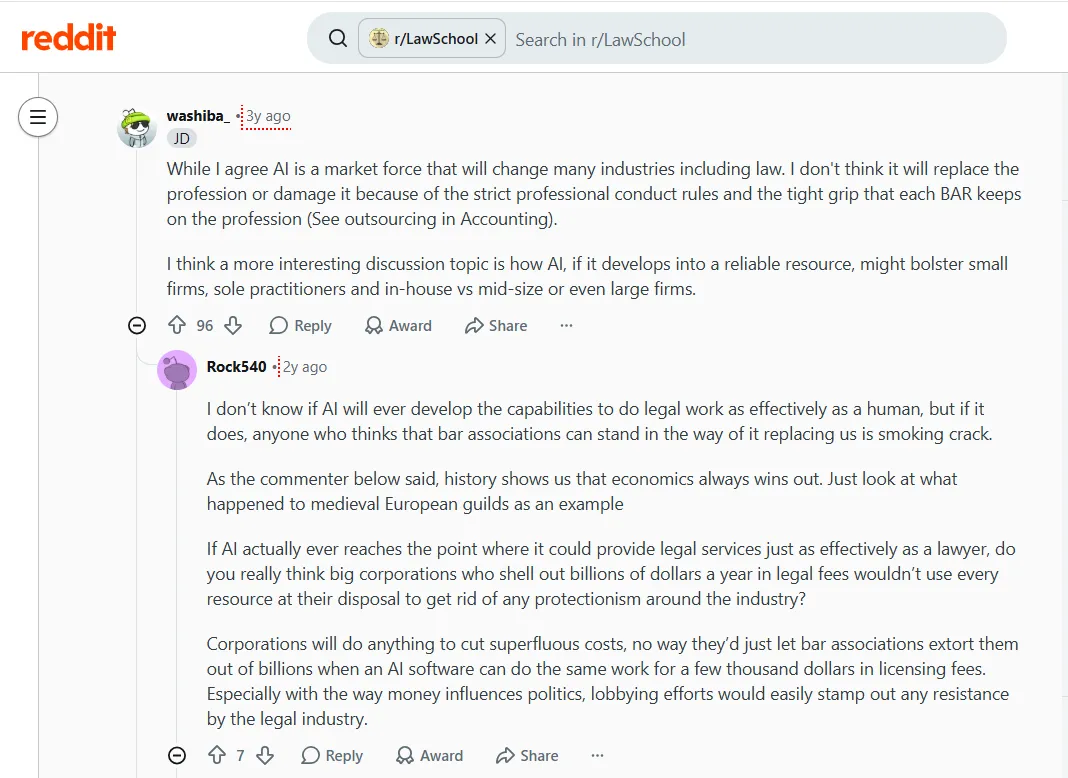
AI in legal processes - Image source
A more realistic perspective is that lawyers who effectively leverage AI may gain a competitive advantage over those who ignore it entirely.
"AI Can Draft. Lawyers Must Decide." These are the words quoted by Advocate Bhaumik Shah, a CISA-certified legal consultant, in our Legal AI webinar held at iFour.
So, to the point, we can say - while the benefits are significant, Data privacy in legal AI remains one of the biggest concerns for legal professionals. Human intervention is indispensable to create security restrictions, especially when using AI.
The risks associated with uploading sensitive client information into AI platforms, particularly free tools, are many. Since lawyers act as custodians of confidential client information, any misuse or unintended exposure of data can create serious legal and ethical challenges.
Some practical recommendations discussed on Responsible AI in legal practice include:

The message is clear: AI adoption without governance can quickly become a compliance risk. Data protection must be a foundational consideration, not an afterthought.
So, that's how the adoption of AI in law and legal practice is transforming the approach to research, documentation, and case preparation.
While use cases of AI in legal practice offer significant efficiency gains, human judgment still remains critical for legal interpretation and decision-making.
Hope you found this blog useful! If you require any assistance in building AI agent solutions or have a Legal AI use case project in mind, reach out to iFour - a reliable partner in Azure AI consulting solutions.
The conversation around AI in legal practice is gradually shifting from excitement to practical implementation.
What we have learned from this Responsible AI The most successful lawyers are not using AI to replace expertise. They are using it to get rid of repetitive work, speed-up research, improve document review, and 2x productivity.
The reality is that the most valuable use cases of AI in the legal industry are not futuristic sci-fi concepts; they are practical solutions that help legal professionals work smarter today.
As legal AI continues to mature, one thing remains certain: technology can improve efficiency, but human judgment will continue to define legal excellence. The future belongs to professionals who can successfully combine both.
AI is redefining legal processes by automating routine tasks. For example: research and document review. This saves lawyers hundreds of hours per year, while also reshaping client expectations and firm economics.
However, it is sensible to also focus on risks like AI hallucinations, bias, and governance gaps, which mean human oversight remains essential.
Here are the top benefits of AI for lawyers:
Speeds up document review, contract drafting, and research.
Frees time for strategic and client-focused work.
Summarizes statutes and precedents instantly.
Improves accuracy and reduces manual effort.
Organizes case files and discovery materials.
Flags missing clauses or inconsistencies automatically.
Tracks regulatory changes in real time.
Minimizes compliance errors and ethical risks.
AI assistants provide instant updates and personalized insights.
Builds trust through faster, clearer communication.
Enables data-driven decisions and predictive analytics.
Positions firms as innovative and competitive.
It is basically a guideline that says AI should automate about 70% of repetitive tasks, leaving humans to manage the remaining 30% that require creativity, judgment, and ethics.
Example: AI drafts contracts or summarizes case law; lawyers refine, verify, and interpret.
It means attorneys' 80% of results should come from 20% of their effort.
This improves productivity and profitability by prioritizing what truly drives results – whether it is focusing on core clients, strategic cases, or other high-value tasks.

A passionate Technical writer and an SEO freak working as a Content Development Manager at iFour Technolab, USA. With extensive experience in IT, Services, and Product sectors, I relish writing about Azure Cloud, Data Analytics, AI, & Workflow Automation and love sharing exceptional insights on various platforms. I believe in constant learning and am passionate about being better every day.


Build Your Agile Team
Recent Posts

Top AI Frameworks Recommended on Reddit For Enterprise Use
October 19, 2026
AI in Legal Practice: Powerful Use Cases Every Lawyer Should Know
September 10, 2026

How to Use Power BI for Sales Forecasting (Guide for CTOs)
August 06, 2026

AI in Power BI - Top Use cases and Best Practices
August 03, 2026
Categories

E-Discovery is a crucial process for legal research enabling lawyers to find the digital evidence they need. It involves finding, collecting, and filtering e-data related to their...

It’s amazing to witness that legal consultants who once clung to print documents have now embraced modern technologies for their legal work. In fact, a recent survey revealed that over 72% of law firms employ cloud-based technologies for managing case files, scheduling, and billing. This shift is not just about convenience; it’s about the progress we observe in the legal field.
There’s a major transformation happening in the legal field, as legal consultants are turning their attention to new technology. Facts say that 48% of legal professionals have raised...

Get this Demo!
Get this Demo!
Get this Demo!
Get this Demo!
Get this Demo!
Get this Demo!