×

iFour Logo

4 Types of Healthcare Analytics with Examples & Success Stories

Kapil Panchal February 12, 2026

Listening is fun too.

Straighten your back and cherish with coffee - PLAY !

  • play
  • pause
  • pause
4 Types of Healthcare Analytics with Examples & Success Stories

You already know how healthcare creates tons of clinical data every day. Patient visits… Labs… EMRs… doctor portals… scheduling systems… everything is generating numbers nonstop.

But here's the truth:

All that data means nothing if no one actually uses it.

It just piles up and sits there.

Now imagine this:

Two clinics have the same amount of medical data.

- One analyzes it.

- One doesn't.

The first clinic identifies gaps in care, streamlines processes, predicts risks — and suddenly starts outperforming everyone else.

The second clinic?

Still stuck in “data overload,” with no real insights to act on.

That's the difference healthcare analytics brings.

The real value isn't in having data.

It's in knowing what type of analytics to use and when to use them.

Descriptive, diagnostic, predictive, prescriptive… They each unlock a different level of clarity.

Using the right one at the right moment would help you get cleaner flows, sharper decisions, and better patient care — every single day.

In this blog post, we will discuss in detail the types of healthcare analytics and when to use what.

4 Types of Healthcare Analytics To Use In Medical Practice

Analytics in healthcare levels up fast. Initially, you start with simple reports, then as you scale, you tap into advanced decision-making, supported by distinct categories of healthcare analytics.

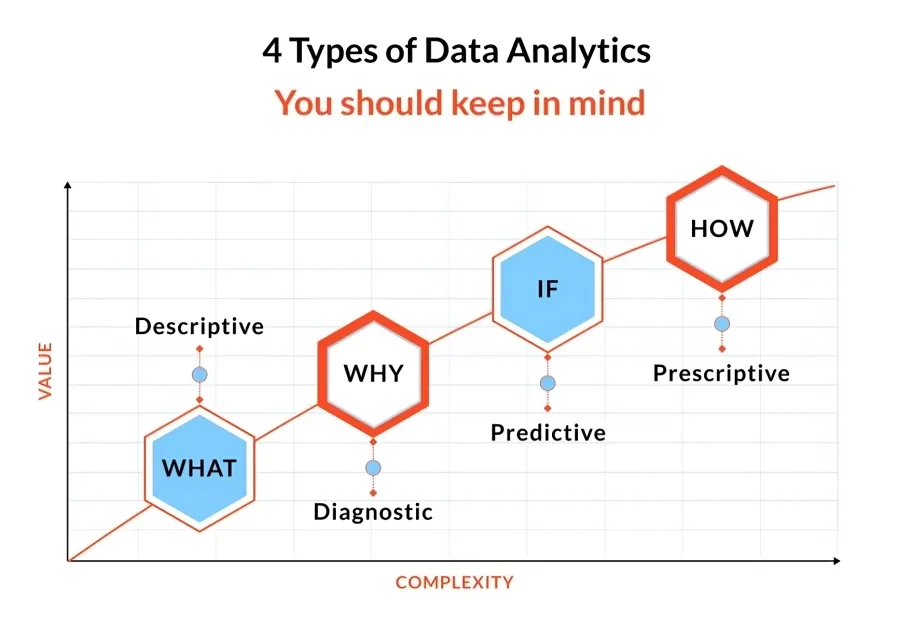
Basically, there are four types of healthcare data analytics available:

1. Descriptive analytics (What happened?)

2. Diagnostic analytics (Why did it happen?)

3. Predictive analytics (What might happen?)

4. Prescriptive analytics (What should happen?)

Together, these healthcare analytics approaches help practices progress from understanding historical performance to recommending actions that improve patient care.

Descriptive Analytics in Healthcare: Understanding What Happened

Descriptive analytics in healthcare focuses on summarizing historical data to answer questions such as:

  • What was the total number of hospital admissions last week?
  • How many patients ended their home therapy program this month (in %)?
  • What are the typical BMM (bone mineral metabolism) lab values among our patients?

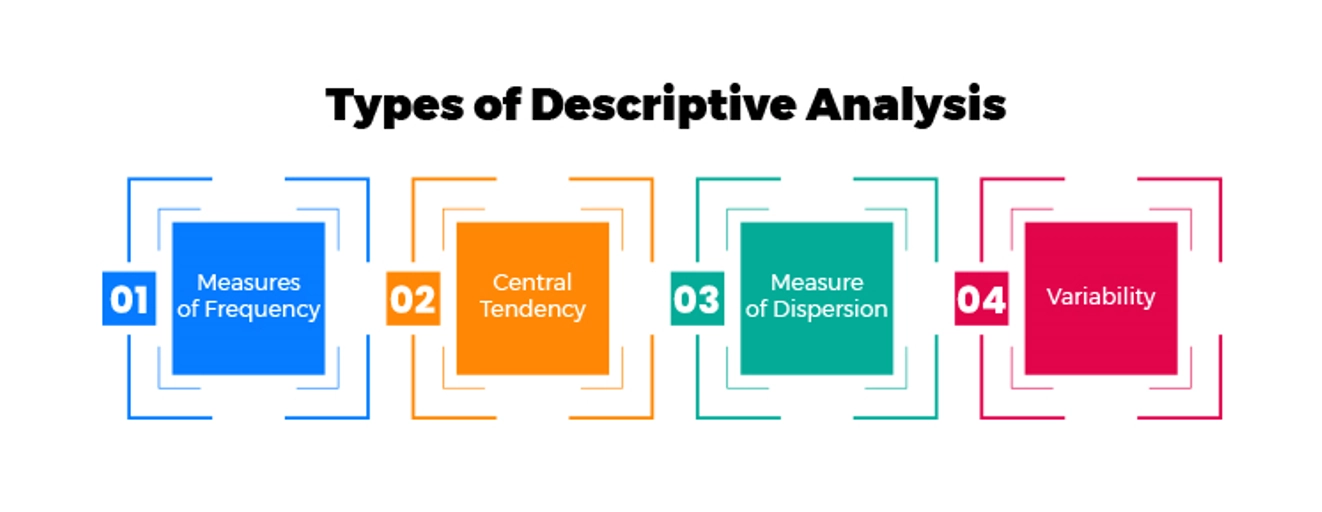
This form of clinical data analysis relies on counts, percentages, averages, and trends. Descriptive analytics forms the foundation of healthcare dashboards, allowing practices to monitor healthcare KPIs and metrics over time and identify areas for performance improvement.

Types of Descriptive Analytics

Image Source: Descriptive analytics types

Descriptive analytics examples in healthcare

  • Patient Population Trends:

    Hospitals track past admissions to spot peak seasons, common diagnoses, and high risk demographic patterns.

  • Treatment Outcomes:

    Doctors review historical patient records to analyze recovery rates, surgical success, and readmission trends.

  • Operational Metrics:

    Clinicians monitor bed occupancy, staffing levels, and billing patterns to identify workflow inefficiencies.

  • Safety & Compliance:

    Physios assess EHR data to evaluate safety checks and compliance performance, highlighting areas for improvement.

Struggling with fragmented patient data? Simplify care delivery with Microsoft Cloud for Healthcare

Diagnostic Analytics in Healthcare: Understanding Why It Happened

While descriptive analytics explains what happened, analytics in healthcare focuses on why it happened.

Common diagnostic questions include:

  • Why were certain patients hospitalized?
  • Why did patients discontinue home therapy?
  • Why are some patients missing BMM targets?

Diagnostic analytics digs deeper into patient data analytics, examining contributing factors and distributions.

For example, if descriptive analytics shows a monthly drop-off in home therapy, diagnostic analysis may reveal causes such as peritonitis, caregiver burnout, or psychosocial challenges. This insight helps practices address root causes rather than symptoms.

Diagnostic Analytics examples in Healthcare

Here are the related examples that use techniques like drill-downs, correlations, and data mining to explain why something happened, helping teams make targeted improvements.

  • Readmission Analysis

    Hospitals review past patient records to find why some people return soon after discharge, helping them improve follow up care.

  • Disease Pattern Detection

    Teams study EHRs and vital signs to spot early warning signs of conditions like sepsis before symptoms get worse.

  • Medication Error Prevention

    Providers compare prescriptions, patient history, and pharmacy data to catch patterns that lead to dosage or medication mistakes.

  • ER Wait Time Optimization

    Analytics tools examine visit trends and bottlenecks to understand what slows the ER down and how staffing or resources can be improved.

Predictive Analytics in Healthcare: Understanding What Will Happen

Predictive analytics in healthcare uses historical data to forecast future events, such as:

  • Which patients are at the highest risk of hospitalization next week
  • Which patients are likely to switch from home therapy to in-center treatment
  • What next month's BMM (Bone Mineral Measurement) values may look like for individual patients

Using advanced healthcare analytics models, including machine learning, predictive analytics identifies patterns across thousands of data points within EHR systems.

These models support clinical decision support by generating risk scores that help care teams intervene earlier.

Tired of guesswork in workforce planning? Unlock insights with HR Analytics consulting services .

How Predictive analytics improve patient outcomes?

Here are the related examples that use techniques like drill-downs, correlations, and data mining to explain why something happened, helping teams make targeted improvements.

Let's understand with a real-world example of Fresenius Medical Care North America:

Nephrologists often treat thousands of patients with end stage renal disease (ESRD). Fresenius Medical Care North America has collected data on more than 1 million ESRD patients — covering treatments, labs, medications, and assessments.

That's petabytes of information, which is too large, making manual research difficult for any clinician.

Here is how predictive analytics makes a difference:

  • It helps in identifying which historical patients most closely match the one currently in the dialysis clinic. Once it is done, prescriptive analytics guides you with the most precise treatment plan.

That's how data analytics in healthcare transforms devastating data into actionable insights that directly improve patient care.

Predictive analytics examples in healthcare

Predictive analytics in healthcare uses statistical models (even ChatGPT uses it) and machine learning on historical data to forecast future events, enabling proactive interventions. It goes beyond diagnosis by anticipating risks like patient drop or outbreaks.

  • Readmission Risk Prediction

    Models review a patient's history and vitals to flag who might return soon after discharge. Early follow ups based on these scores have helped hospitals like UnityPoint Health cut readmissions significantly.

  • Sepsis Detection

    Algorithms monitor real-time EHRs, labs, and vitals to spot sepsis early before symptoms appear, alerting staff at provisions, like the University of Pennsylvania Health System, to reduce mortality.

  • Disease Outbreak Forecasting

    Analytics tools study symptom trends, weather, and movement patterns to predict outbreaks like flu or COVID, helping hospitals prepare resources in advance.

  • No-Show Forecasting Using BI

    Hospitals predict appointment no-shows using demographics and past behavior, triggering reminders that reduced rates by over 10% in trials at places like Doctor Luis Calvo Mackenna Hospital.

Prescriptive Analytics in Healthcare: Understanding What Actions to Take

Prescriptive analytics in healthcare goes one step further by recommending actions to influence outcomes. Examples include:

  • Scheduling an additional treatment to reduce the risk of fluid overload
  • Assigning a social worker visit to prevent home therapy discontinuation
  • Adjusting BMM therapy to improve medication adherence

By identifying modifiable risk drivers, prescriptive analytics supports healthcare performance improvement and more personalized care delivery.

While it represents the most advanced of all healthcare data analytics types, it is designed to augment, not replace, clinical judgment.

Examples of Prescriptive Analytics in Healthcare

Here are the instances where prescriptive analytics suggests what to do next, turning insights into clear, actionable improvements for healthcare teams.

  • Personalized Treatment Plans

    Systems review a patient's genetics, history, and vitals to recommend personalized therapies - like the best medication or diet plan, eventually helping patients stick to treatment and recover faster.

  • Readmission Prevention Strategies

    After spotting who's at risk of coming back, tools suggest smarter follow ups, medication adjustments, or home care support to reduce avoidable readmissions.

  • Resource & Staffing Optimization

    Hospitals use analytics to predict busy periods and fine tune bed assignments, staffing, and supplies - cutting delays and improving patient flow.

  • Inventory & Supply Management

    Analytics forecast demand for items like PPE or medications and recommend ideal stock levels to prevent shortages while reducing waste.


Overwhelmed by scattered reports? Gain clarity with our dashboard development services

Healthcare Analytics Case Studies (Success Stories)

Now that you have clarity on the types of data analytics in healthcare and which one to use when, let’s look at some of the top success stories of healthcare analytics

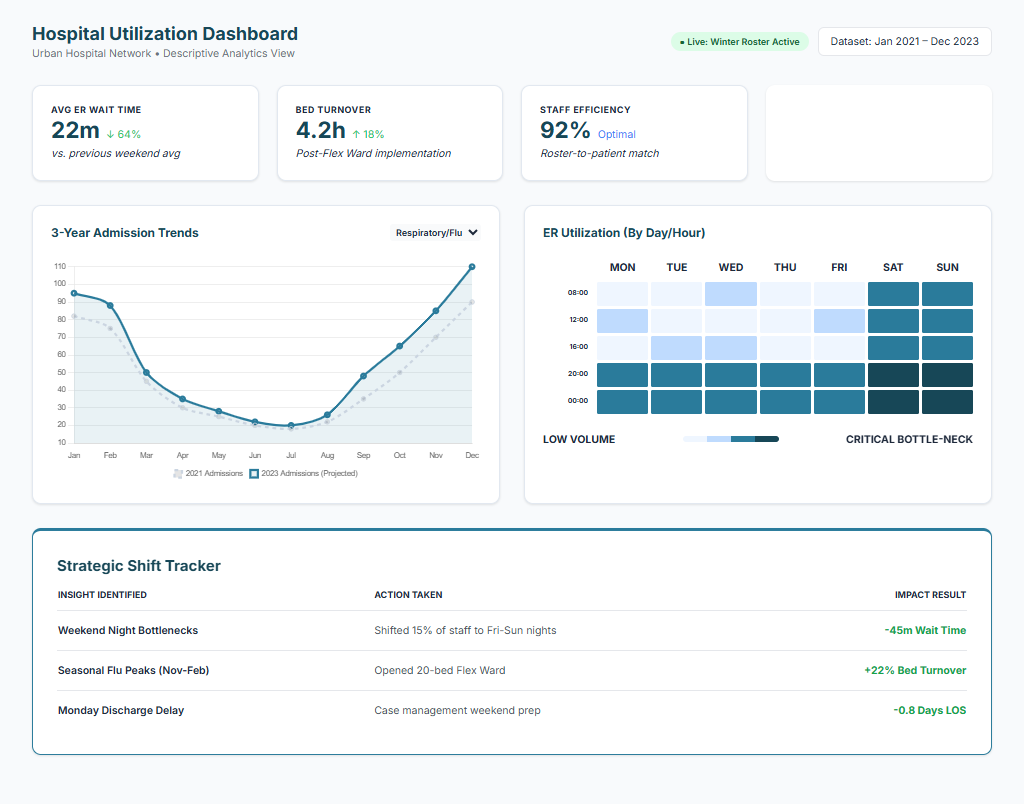
Descriptive analytics - Hospital Utilization Case Study

In a large urban hospital network, leaders wanted to understand how patient admissions change with seasons.

They used descriptive analytics dashboards to study three years of admission records. The data showed clear peaks in flu related visits every winter and bottlenecks in the emergency department during weekend nights.

With these insights, the hospital adjusted staff rosters and opened a flex ward during peak months. This reduced ER wait times and improved bed turnover, without adding permanent capacity.

Hospital Utilization Dashboard

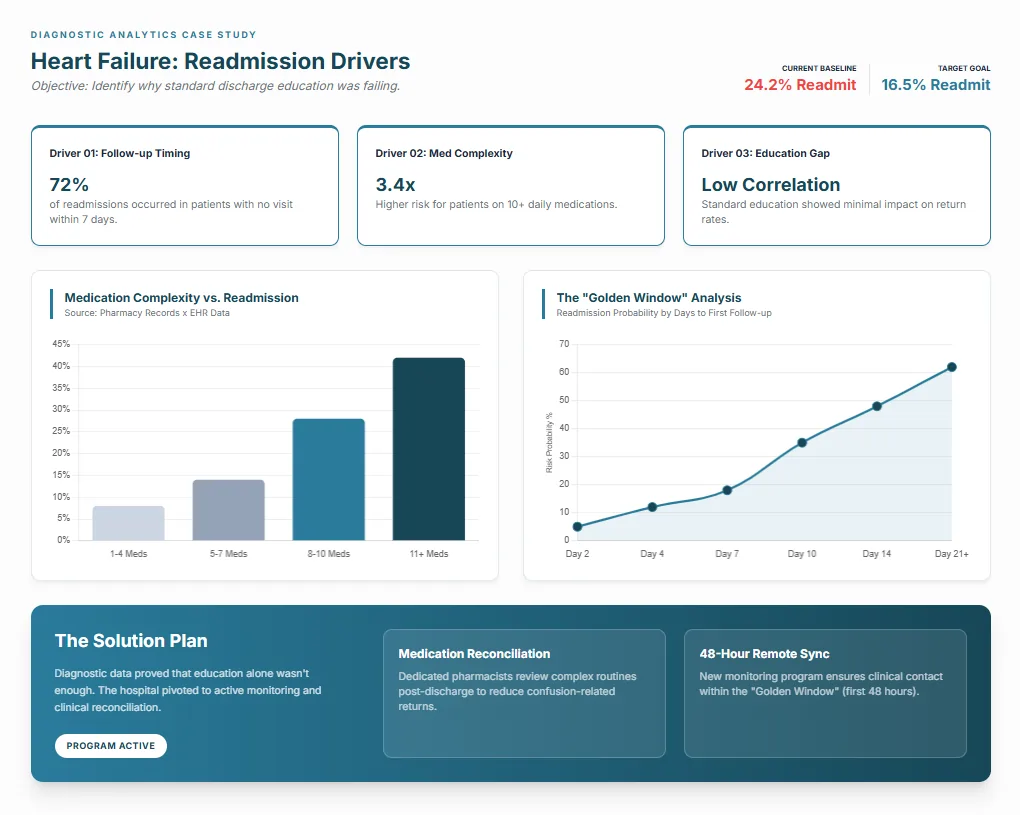
Diagnostic Analytics Case Study: Understanding Drivers (Readmissions etc.)

A regional medical center was facing high 30 day readmission rates for heart failure patients, even after giving standard discharge education.

The quality team applied diagnostic analytics, digging into EHR data, pharmacy records, and follow up schedules. They found that patients without timely follow up and those with complex medication routines were most likely to return.

Based on this, the hospital started new post discharge monitoring and medication reconciliation programs. This helped bring down readmissions significantly.

Read here: Diagnostic Analytics in Healthcare Case Study

Heart Failure  Readmission Drivers

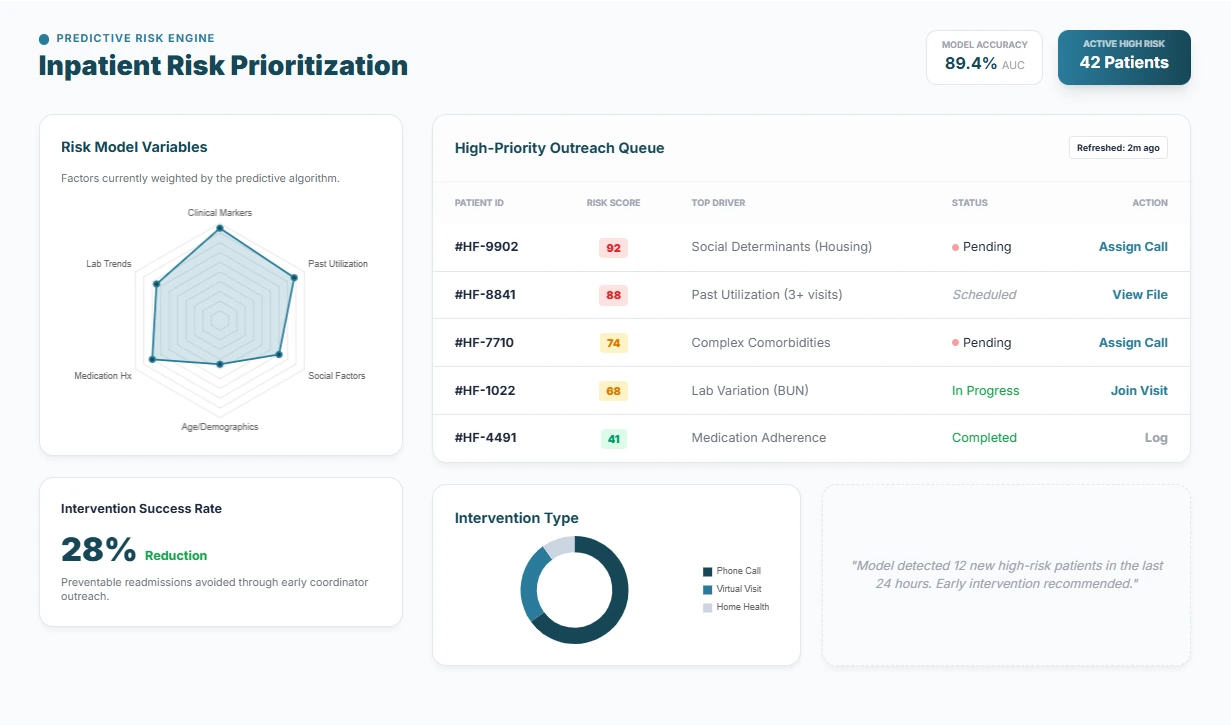
Predictive Analytics Case Study - Readmission Risk Model

An integrated health system wanted to prevent avoidable readmissions. They implemented predictive models that flagged inpatients at high risk of returning within 30 days.

The model used clinical variables, past utilization history, and social factors to generate a risk score at discharge.

Care coordinators then prioritized high risk patients for phone calls and virtual visits. This early intervention helped manage complications and reduced preventable readmissions.

Source: Predictive Analytics in Healthcare Case Study

Predictive Risk Engine Case Study

Data silos slowing decisions? Accelerate insights with Azure Synapse Analytics services

Prescriptive Analytics Success Story - Predictive Model plus Targeted Intervention

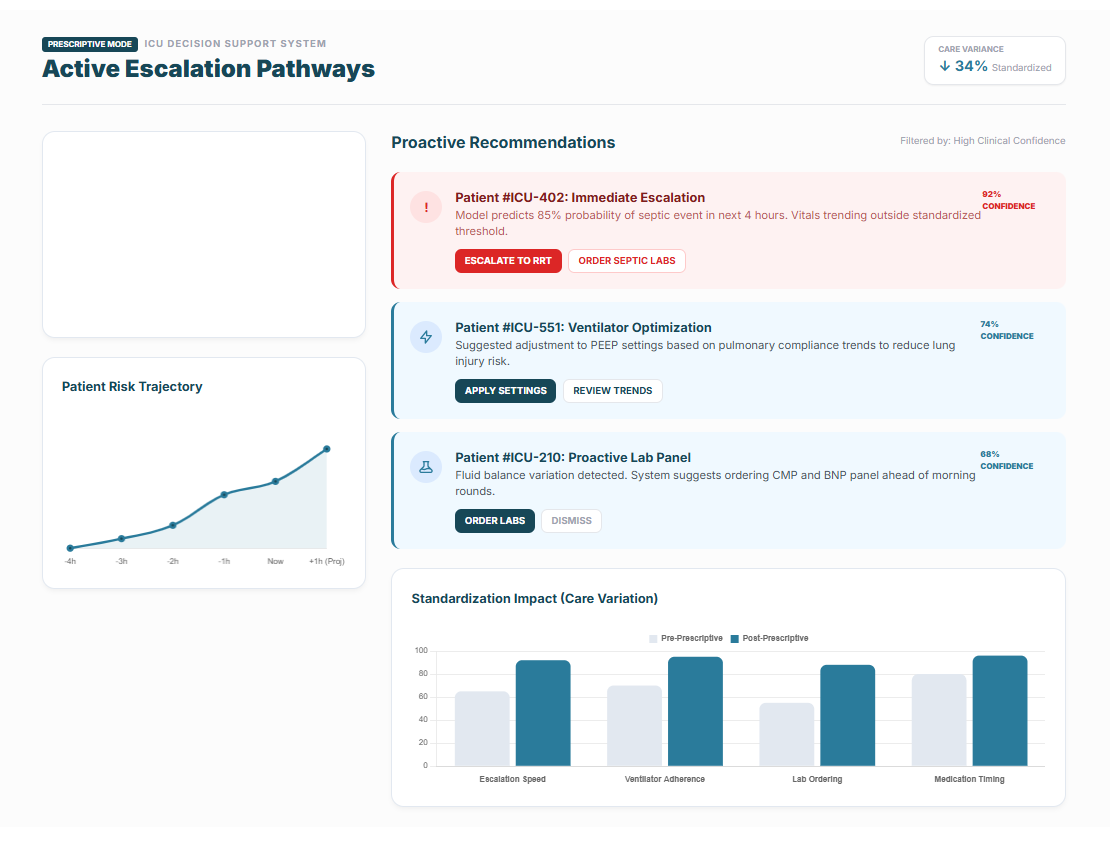
A tertiary care hospital deployed a prescriptive analytics engine in its ICU.

Building on predictive risk scores, the system suggested proactive actions like ordering labs, adjusting ventilator settings, or escalating to rapid response.

Clinicians reviewed these recommendations and gradually standardized escalation pathways.

This improved patient outcomes and reduced variation in care across the ICU.

Read more: Prescriptive Analytics in Healthcare Case Study

Active Escalation Pathways Case Study

Discovery / Advanced Analytics - Research and Precision Care Success Story

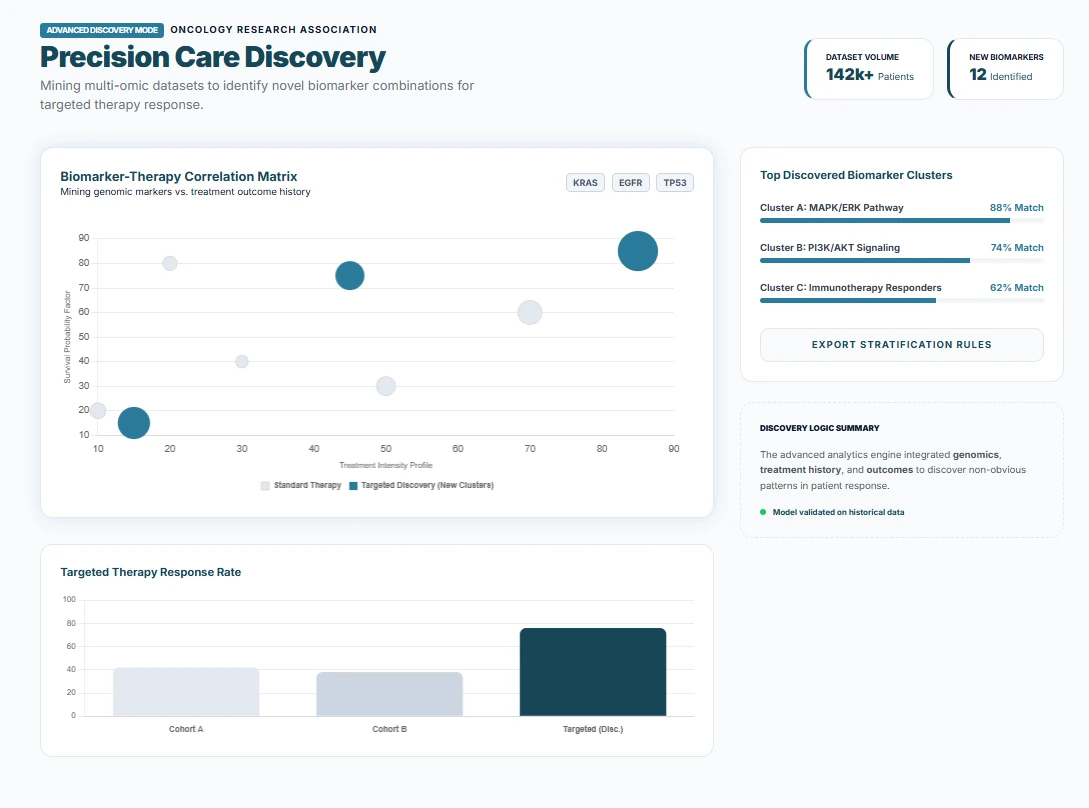
A hospital association focused on oncology research applied discovery analytics to a large dataset of cancer patients. The dataset included genomics, treatment history, and outcomes.

Advanced data mining revealed new biomarker combinations linked to better responses to a targeted therapy.

These insights informed new clinical trial designs and improved patient stratification in precision oncology programs.

Precision Care Discovery Case Study

So, this is how healthcare analytics is used in Medical practices to improve clinical decision-making.

That's all for now — hope this was helpful! Explore our blog for more inspiring and insightful reads.

Categories of Healthcare Analytics - Final Takeaway

Data analytics is essential for medical practices as it helps them analyse large datasets and support data-driven healthcare decisions.

This article breaks down the four major types of healthcare analytics

  • Descriptive Analytics -> Explains past trends
  • Diagnostic Analytics -> Identifies root causes
  • Predictive Analytics -> Forecasts future risks
  • Prescriptive Analytics -> Recommends best actions

We also looked at examples and real case studies for each, showcasing how real hospitals and clinics use each one to improve care delivery and make better decisions.

So, with all this, it is clear to say that healthcare analytics is no longer optional — it is foundational to modern, data-driven care delivery.

Want to join the future of healthcare intelligence? Choose iFour and get reliable, expert Business Intelligence services.

FAQs on Healthcare Data Analytics

1. What is healthcare analytics?

Healthcare analytics refers to the use of mathematical, statistical, and computational techniques to analyze large datasets and support data-driven healthcare decisions. In this article, we explain the four types of healthcare analytics, how they differ, and how each can be applied to improve clinical and operational outcomes.

2. What are the types of predictive analytics?

Predictive analytics typically are of three types: regression models, decision trees, and neural networks. These approaches help analyze patterns in data and forecast future outcomes in a clear, reliable way.

4 Types of Healthcare Analytics with Examples & Success Stories You already know how healthcare creates tons of clinical data every day. Patient visits… Labs… EMRs… doctor portals… scheduling systems… everything is generating numbers nonstop. But here's the truth: All that data means nothing if no one actually uses it. It just piles up and sits there. Now imagine this: Two clinics have the same amount of medical data. - One analyzes it. - One doesn't. The first clinic identifies gaps in care, streamlines processes, predicts risks — and suddenly starts outperforming everyone else. The second clinic? Still stuck in “data overload,” with no real insights to act on. That's the difference healthcare analytics brings. The real value isn't in having data. It's in knowing what type of analytics to use and when to use them. Descriptive, diagnostic, predictive, prescriptive… They each unlock a different level of clarity. Using the right one at the right moment would help you get cleaner flows, sharper decisions, and better patient care — every single day. In this blog post, we will discuss in detail the types of healthcare analytics and when to use what. 4 Types of Healthcare Analytics To Use In Medical Practice Analytics in healthcare levels up fast. Initially, you start with simple reports, then as you scale, you tap into advanced decision-making, supported by distinct categories of healthcare analytics. Basically, there are four types of healthcare data analytics available: 1. Descriptive analytics (What happened?) 2. Diagnostic analytics (Why did it happen?) 3. Predictive analytics (What might happen?) 4. Prescriptive analytics (What should happen?) Together, these healthcare analytics approaches help practices progress from understanding historical performance to recommending actions that improve patient care. Read More: Top Data Analytics Trends You Can't Ignore Descriptive Analytics in Healthcare: Understanding What Happened Descriptive analytics in healthcare focuses on summarizing historical data to answer questions such as: What was the total number of hospital admissions last week? How many patients ended their home therapy program this month (in %)? What are the typical BMM (bone mineral metabolism) lab values among our patients? This form of clinical data analysis relies on counts, percentages, averages, and trends. Descriptive analytics forms the foundation of healthcare dashboards, allowing practices to monitor healthcare KPIs and metrics over time and identify areas for performance improvement. Image Source: Descriptive analytics types Descriptive analytics examples in healthcare Patient Population Trends: Hospitals track past admissions to spot peak seasons, common diagnoses, and high risk demographic patterns. Treatment Outcomes: Doctors review historical patient records to analyze recovery rates, surgical success, and readmission trends. Operational Metrics: Clinicians monitor bed occupancy, staffing levels, and billing patterns to identify workflow inefficiencies. Safety & Compliance: Physios assess EHR data to evaluate safety checks and compliance performance, highlighting areas for improvement. Struggling with fragmented patient data? Simplify care delivery with Microsoft Cloud for Healthcare Explore Solutions Diagnostic Analytics in Healthcare: Understanding Why It Happened While descriptive analytics explains what happened, analytics in healthcare focuses on why it happened. Common diagnostic questions include: Why were certain patients hospitalized? Why did patients discontinue home therapy? Why are some patients missing BMM targets? Diagnostic analytics digs deeper into patient data analytics, examining contributing factors and distributions. For example, if descriptive analytics shows a monthly drop-off in home therapy, diagnostic analysis may reveal causes such as peritonitis, caregiver burnout, or psychosocial challenges. This insight helps practices address root causes rather than symptoms. Read More: 19 Power BI Case Studies That Showcase Real-World Success Diagnostic Analytics examples in Healthcare Here are the related examples that use techniques like drill-downs, correlations, and data mining to explain why something happened, helping teams make targeted improvements. Readmission Analysis Hospitals review past patient records to find why some people return soon after discharge, helping them improve follow up care. Disease Pattern Detection Teams study EHRs and vital signs to spot early warning signs of conditions like sepsis before symptoms get worse. Medication Error Prevention Providers compare prescriptions, patient history, and pharmacy data to catch patterns that lead to dosage or medication mistakes. ER Wait Time Optimization Analytics tools examine visit trends and bottlenecks to understand what slows the ER down and how staffing or resources can be improved. Predictive Analytics in Healthcare: Understanding What Will Happen Predictive analytics in healthcare uses historical data to forecast future events, such as: Which patients are at the highest risk of hospitalization next week Which patients are likely to switch from home therapy to in-center treatment What next month's BMM (Bone Mineral Measurement) values may look like for individual patients Using advanced healthcare analytics models, including machine learning, predictive analytics identifies patterns across thousands of data points within EHR systems. These models support clinical decision support by generating risk scores that help care teams intervene earlier. Tired of guesswork in workforce planning? Unlock insights with HR Analytics consulting services . Get Expert Help How Predictive analytics improve patient outcomes? Here are the related examples that use techniques like drill-downs, correlations, and data mining to explain why something happened, helping teams make targeted improvements. Let's understand with a real-world example of Fresenius Medical Care North America: Nephrologists often treat thousands of patients with end stage renal disease (ESRD). Fresenius Medical Care North America has collected data on more than 1 million ESRD patients — covering treatments, labs, medications, and assessments. That's petabytes of information, which is too large, making manual research difficult for any clinician. Here is how predictive analytics makes a difference: It helps in identifying which historical patients most closely match the one currently in the dialysis clinic. Once it is done, prescriptive analytics guides you with the most precise treatment plan. That's how data analytics in healthcare transforms devastating data into actionable insights that directly improve patient care. Predictive analytics examples in healthcare Predictive analytics in healthcare uses statistical models (even ChatGPT uses it) and machine learning on historical data to forecast future events, enabling proactive interventions. It goes beyond diagnosis by anticipating risks like patient drop or outbreaks. Readmission Risk Prediction Models review a patient's history and vitals to flag who might return soon after discharge. Early follow ups based on these scores have helped hospitals like UnityPoint Health cut readmissions significantly. Sepsis Detection Algorithms monitor real-time EHRs, labs, and vitals to spot sepsis early before symptoms appear, alerting staff at provisions, like the University of Pennsylvania Health System, to reduce mortality. Disease Outbreak Forecasting Analytics tools study symptom trends, weather, and movement patterns to predict outbreaks like flu or COVID, helping hospitals prepare resources in advance. No-Show Forecasting Using BI Hospitals predict appointment no-shows using demographics and past behavior, triggering reminders that reduced rates by over 10% in trials at places like Doctor Luis Calvo Mackenna Hospital. Prescriptive Analytics in Healthcare: Understanding What Actions to Take Prescriptive analytics in healthcare goes one step further by recommending actions to influence outcomes. Examples include: Scheduling an additional treatment to reduce the risk of fluid overload Assigning a social worker visit to prevent home therapy discontinuation Adjusting BMM therapy to improve medication adherence By identifying modifiable risk drivers, prescriptive analytics supports healthcare performance improvement and more personalized care delivery. Read More: HR Analytics Dashboard – Key Metrics & Examples While it represents the most advanced of all healthcare data analytics types, it is designed to augment, not replace, clinical judgment. Examples of Prescriptive Analytics in Healthcare Here are the instances where prescriptive analytics suggests what to do next, turning insights into clear, actionable improvements for healthcare teams. Personalized Treatment Plans Systems review a patient's genetics, history, and vitals to recommend personalized therapies - like the best medication or diet plan, eventually helping patients stick to treatment and recover faster. Readmission Prevention Strategies After spotting who's at risk of coming back, tools suggest smarter follow ups, medication adjustments, or home care support to reduce avoidable readmissions. Resource & Staffing Optimization Hospitals use analytics to predict busy periods and fine tune bed assignments, staffing, and supplies - cutting delays and improving patient flow. Inventory & Supply Management Analytics forecast demand for items like PPE or medications and recommend ideal stock levels to prevent shortages while reducing waste. Overwhelmed by scattered reports? Gain clarity with our dashboard development services Build My Dashboard Healthcare Analytics Case Studies (Success Stories) Now that you have clarity on the types of data analytics in healthcare and which one to use when, let’s look at some of the top success stories of healthcare analytics Descriptive analytics - Hospital Utilization Case Study In a large urban hospital network, leaders wanted to understand how patient admissions change with seasons. They used descriptive analytics dashboards to study three years of admission records. The data showed clear peaks in flu related visits every winter and bottlenecks in the emergency department during weekend nights. With these insights, the hospital adjusted staff rosters and opened a flex ward during peak months. This reduced ER wait times and improved bed turnover, without adding permanent capacity. Read More: Top 8 Benefits of Big Data Analytics for E-Commerce Diagnostic Analytics Case Study: Understanding Drivers (Readmissions etc.) A regional medical center was facing high 30 day readmission rates for heart failure patients, even after giving standard discharge education. The quality team applied diagnostic analytics, digging into EHR data, pharmacy records, and follow up schedules. They found that patients without timely follow up and those with complex medication routines were most likely to return. Based on this, the hospital started new post discharge monitoring and medication reconciliation programs. This helped bring down readmissions significantly. Read here: Diagnostic Analytics in Healthcare Case Study Predictive Analytics Case Study - Readmission Risk Model An integrated health system wanted to prevent avoidable readmissions. They implemented predictive models that flagged inpatients at high risk of returning within 30 days. The model used clinical variables, past utilization history, and social factors to generate a risk score at discharge. Care coordinators then prioritized high risk patients for phone calls and virtual visits. This early intervention helped manage complications and reduced preventable readmissions. Source: Predictive Analytics in Healthcare Case Study Data silos slowing decisions? Accelerate insights with Azure Synapse Analytics services Start Analyzing Prescriptive Analytics Success Story - Predictive Model plus Targeted Intervention A tertiary care hospital deployed a prescriptive analytics engine in its ICU. Building on predictive risk scores, the system suggested proactive actions like ordering labs, adjusting ventilator settings, or escalating to rapid response. Clinicians reviewed these recommendations and gradually standardized escalation pathways. This improved patient outcomes and reduced variation in care across the ICU. Read more: Prescriptive Analytics in Healthcare Case Study Discovery / Advanced Analytics - Research and Precision Care Success Story A hospital association focused on oncology research applied discovery analytics to a large dataset of cancer patients. The dataset included genomics, treatment history, and outcomes. Advanced data mining revealed new biomarker combinations linked to better responses to a targeted therapy. These insights informed new clinical trial designs and improved patient stratification in precision oncology programs. Read More: Top Business Intelligence Reporting Tools for CTOs So, this is how healthcare analytics is used in Medical practices to improve clinical decision-making. That's all for now — hope this was helpful! Explore our blog for more inspiring and insightful reads. Categories of Healthcare Analytics - Final Takeaway Data analytics is essential for medical practices as it helps them analyse large datasets and support data-driven healthcare decisions. This article breaks down the four major types of healthcare analytics Descriptive Analytics -> Explains past trends Diagnostic Analytics -> Identifies root causes Predictive Analytics -> Forecasts future risks Prescriptive Analytics -> Recommends best actions We also looked at examples and real case studies for each, showcasing how real hospitals and clinics use each one to improve care delivery and make better decisions. So, with all this, it is clear to say that healthcare analytics is no longer optional — it is foundational to modern, data-driven care delivery. Want to join the future of healthcare intelligence? Choose iFour and get reliable, expert Business Intelligence services. FAQs on Healthcare Data Analytics 1. What is healthcare analytics? Healthcare analytics refers to the use of mathematical, statistical, and computational techniques to analyze large datasets and support data-driven healthcare decisions. In this article, we explain the four types of healthcare analytics, how they differ, and how each can be applied to improve clinical and operational outcomes. 2. What are the types of predictive analytics? Predictive analytics typically are of three types: regression models, decision trees, and neural networks. These approaches help analyze patterns in data and forecast future outcomes in a clear, reliable way.


Build Your Agile Team

Categories

Ensure your sustainable growth with our team

Talk to our experts
Sustainable
Sustainable
 
Blog Our insights
What’s New in .NET 9?

27 September 2024

Kapil Panchal

What’s New in .NET 9?

Today, we’re thrilled to present you with the first glimpse of .NET 9 release and let you know what features and updates you can anticipate in this new version. Various professionals believe that it’s the right time to explore and adopt the latest version of .NET for your upcoming projects. It is even recommended for projects built using .NET 6 or .NET 8, due to the framework updates made in this version.

.NET MAUI vs React Native for Cross-platform Applications

30 August 2024

Kapil Panchal

.NET MAUI vs React Native for Cross-platform Applications

The dominance of Android, which holds a 71% market share, coupled with iOS supremacy in the US market, shows just how important it is to create apps that work on different platforms....

What's New in .NET 8?

06 June 2023

Kapil Panchal

What's New in .NET 8?

DOT NET is a prominent platform for custom software development chosen mostly by large-scale IT giants. According to statistics, there are more than 307,590 developers working in the...