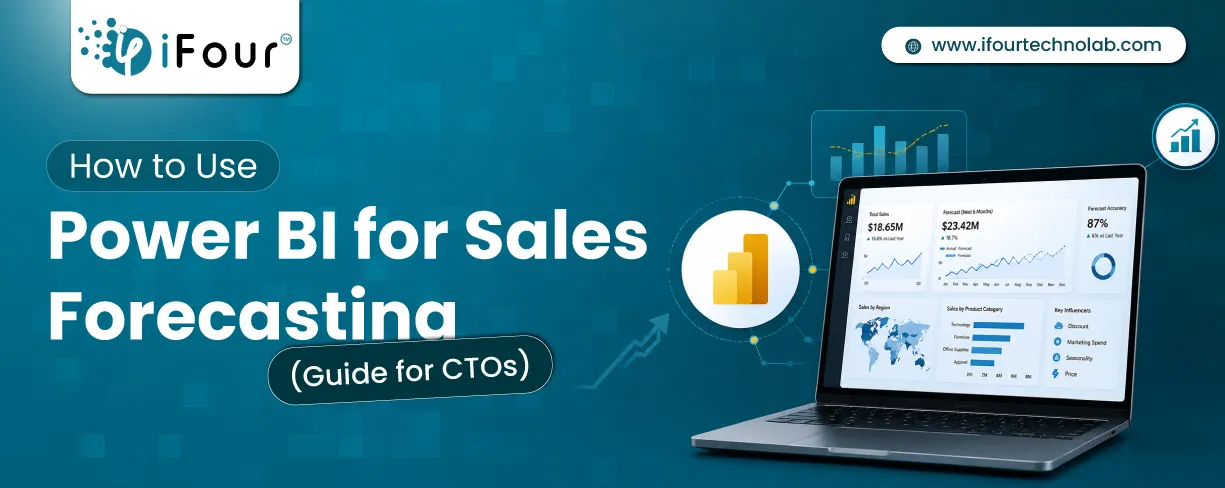
How to Do Forecasting in Power BI (Steps & Accuracy Metrics)
Remember our last guide - Power BI forecasting? It revealed things that truly blocks accuracy, both structural and situational. Now it's time to take the next step. Knowing Power...
Listening is fun too.
Straighten your back and cherish with coffee - PLAY !
Summarize this article with:

Selecting the right project management software helps you complete tasks on time with accuracy. Whether your team has five people or five hundred, choosing the right solution is essential to keep workflows streamlined and results consistent.
Rather than switching between multiple tools, a project management solution gives you everything in one place. It supports client requirement analysis, project planning, task distribution, live status tracking, and workflow standardization. With AI-powered project management, you can take efficiency even further — automating routine tasks, predicting risks, and ensuring smoother delivery across teams of any size.
This blog differentiates the deserving project management tools for small teams, medium-sized businesses, and large organizations to provide you clarity on which tool is suitable for your company.
Today’s businesses operate in a high-speed environment where they have to handle multiple tasks simultaneously. In the absence of a perfect system, teams might face:
Project management tools solve these challenges by offering:
Optimize business processes with reliable Microsoft Power Platform consulting.
Small-scale businesses usually have the expectation of tools that can satisfy their needs without investing high amounts. They also prefer to select such solutions that adapt to their regular way of working without disrupting much of their flow. A better project management software comparison can help small companies to clear their confusion regarding available alternatives in the market.
1. Asana
Asana is referred to as a cloud-based work management platform, which provides services like project creation, task allocation, status tracking, etc. It allows managing the project from a centralized entity. It is meant for carrying out simple tasks like progress tracking to advanced workflows like Agile.
Best For:
Key Features:
2. Basecamp
Basecamp is a web-based project management tool that delivers great services for handling projects smoothly. Recognized mostly for its centralized and beginner-friendly structure.
Best For:
Key Features:
3. Trello
Trello is widely known for its way of presenting workflows. It shows the project structure in a hierarchical format. Trello basically uses terms like boards, lists, and cards, which represent a project, stage, and task, respectively. It comes with lots of views through which you can visualize your project.
Best For:
Key Features:
4. Notion
Notion is a perfect platform for an organization whose primary focus is documentation with project management. It supports creating your own system for handling projects. Adapts easily to an increasing network. It is a simple project management tool for startups.
Best For:
Key Features:
5. Podio
Podio is a tool that provides customizable workflow generation with the goal of giving flexibility to users for project management. It allows creating apps to handle clients, processes, schedules, and priorities without much technical knowledge.
Best For:
Key Features:
Create AI-driven experiences through tailored LLM development solutions — future ready today.
Medium-sized organizations require tools that support modern methodologies and advanced strategies. On top of this, features like strong resource utilization, clear roles and responsibilities, and better performance analysis are in major demand while selecting the best project management software.
1. Wrike
Wrike is one of the advanced project management tools for businesses that are willing to operate their project with proper regulations. It is suitable for product as well as service-based organizations.
Best For:
Key Features:
2. Smartsheet
Smartsheet is one of the work management software which has a structure like a spreadsheet. It can provide strong data handling, as most of the decisions are based on this data.
Best For:
Key Features:
3. Click Up
ClickUp is one of the cloud-based project management tools that eliminates the scattered workflow by providing project handling from a single source. A hierarchical work structure is adopted by this software, helping teams to understand the work easily.
Best For:
Key Features:
4. Monday.com
Monday.com allows the entire project management facility to be handled by the team, from carrying out minor tasks like sending regular work updates to major ones like generating reports for making decisions.
Best For:
Key Features:
Large enterprises or organizations need a unified project management entity that can cover a large number of projects to provide an overview of ongoing activities. Besides, a strong governance structure, proper portfolio management, powerful risk evaluation, and an accurate decision-making system are also essential.
1. Jira
Jira is enterprise project management software developed for handling software-based projects that support agile frameworks. It is the best tool for projects that require frequent changes. This tool is popular for the early detection of issues and bugs in the process.
Best For:
Key Features:
2. Adobe Workfront
Adobe Workfront is one of the advanced project management solutions designed for projects that involve high-risk goals. It helps the team to stay aligned with the process to achieve the final deadlines. This tool is also known for optimized resource utilization.
Best For:
Key Features:
3. Microsoft Project
Microsoft Project is used across many domains, such as IT, healthcare, construction, etc., as it provides better project management services. It is designed for businesses that require proper planning from requirement analysis to the deployment of the product.
Best For:
Key Features:
Grow your business with customized end-to-end Commerce solutions — built for scale and impact.
Choosing the right project management tools for businesses has become essential rather than a choice. People end up selecting the wrong solution due to overhyped rumors spread by the vendors in the market. But here you will get a proper guide on which tool to go for.
Best picks: Asana, Trello, Basecamp
Best picks: ClickUp, Wrike, Monday.com
Best picks: Jira, Microsoft Project, Adobe Workfront
Some of the necessary considerations to include that will help you make the right choice while buying a particular solution:
The appropriate project management software is not the one that is well-known and widely used in the market—it is the one that satisfies your business requirements and reduces your team’s workload.
It is not necessary that the tool that is working well for others can also work similarly for your company. A detailed project management software comparison can save you from this situation.
Nowadays, every company is trying to adapt project management software into its workflow. So, if your company is still working in traditional ways without any required tools for project management, it might have to face a great downfall in upcoming time.
Asana, Trello, and ClickUp are strong choices for startups because they are easy to adapt and scalable. Besides, they have a user-friendly interface.
Basecamp and Monday.com are widely used for remote organizations as they offer an internal communication medium and real-time visibility into ongoing processes.
When it comes to software building companies, Jira is the perfect choice as it is designed to handle software development projects that follow advanced frameworks such as agile, scrum, DevOps, etc.
Yes, but many enterprise tools can be complex and costly. Smaller businesses often gain better ROI from simpler platforms first.
Free plans can work for small teams with basic needs, but growing organizations usually need paid features like automation, reporting, permissions, and integration.
Remember our last guide - Power BI forecasting? It revealed things that truly blocks accuracy, both structural and situational. Now it's time to take the next step. Knowing Power...
Security has always been a major concern. Your company spends millions on cybersecurity tools, and guess what? You’re still vulnerable. When you're working in the cloud, especially...
Automation isn’t just a trend anymore. It’s a must-have for any business relying on the Cloud. As the firm grows, cloud infrastructure gets more complex. So, choosing the right Infrastructure...