We use cookies to improve your experience on our site. Please accept cookies for optimal performance.


601 & 612, The Times square Arcade, Near Baghban party plot, Thaltej - Shilaj Road, Thaltej, Ahmedabad, Gujarat - 380059
Ahmedabad
20 May 2026
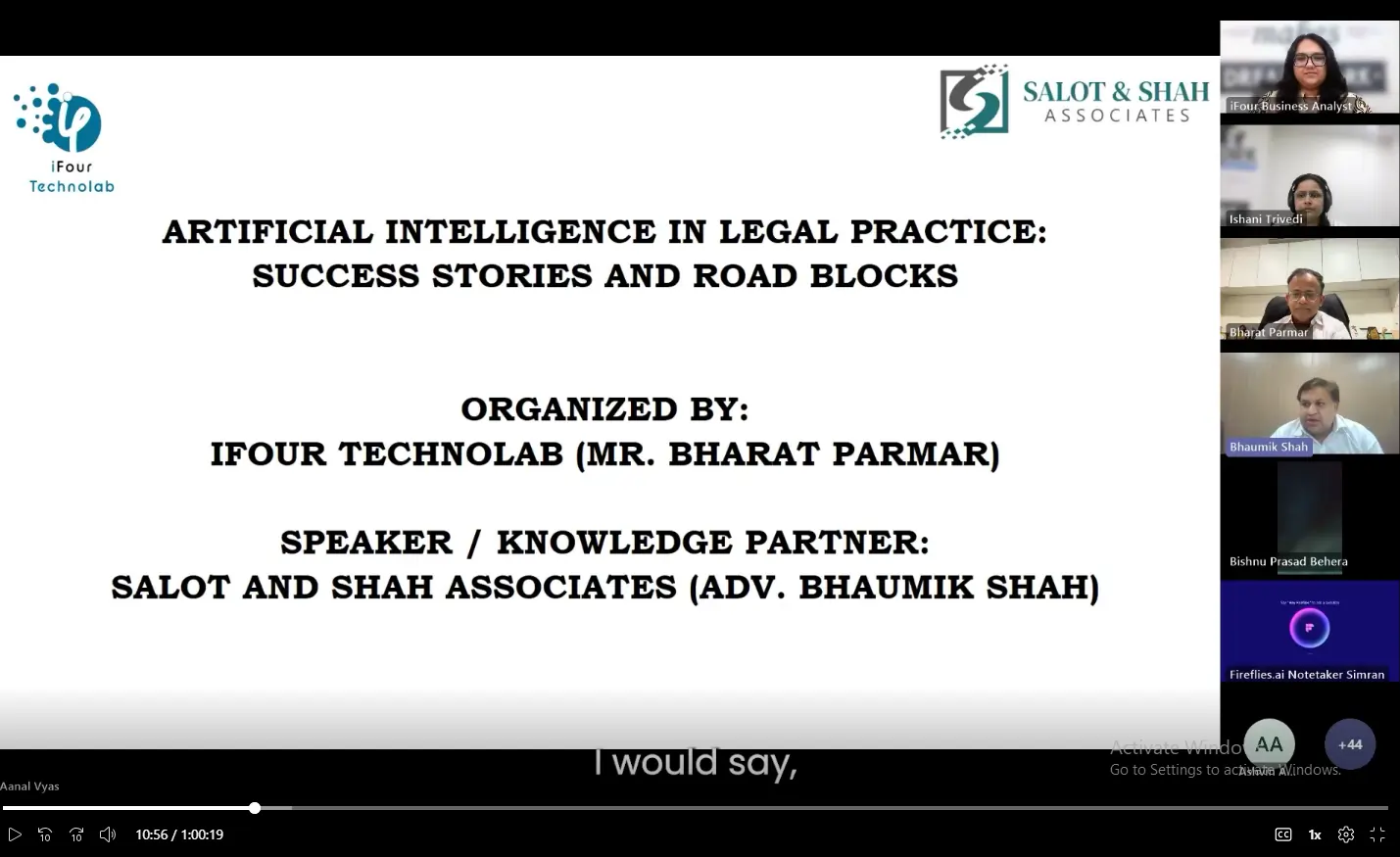
iFour Technolab, a well-known legal software development company, recently hosted a Legal webinar called "AI in Legal Practice – Success Stories and Roadblocks".
The session was led by an experienced Advocate and a CISA Certified Law Expert, Bhaumik Shah from Ahmedabad, Gujarat.
The session was entirely focused on how AI is used in the legal field, showing where it succeeds and where it doesn't work well.
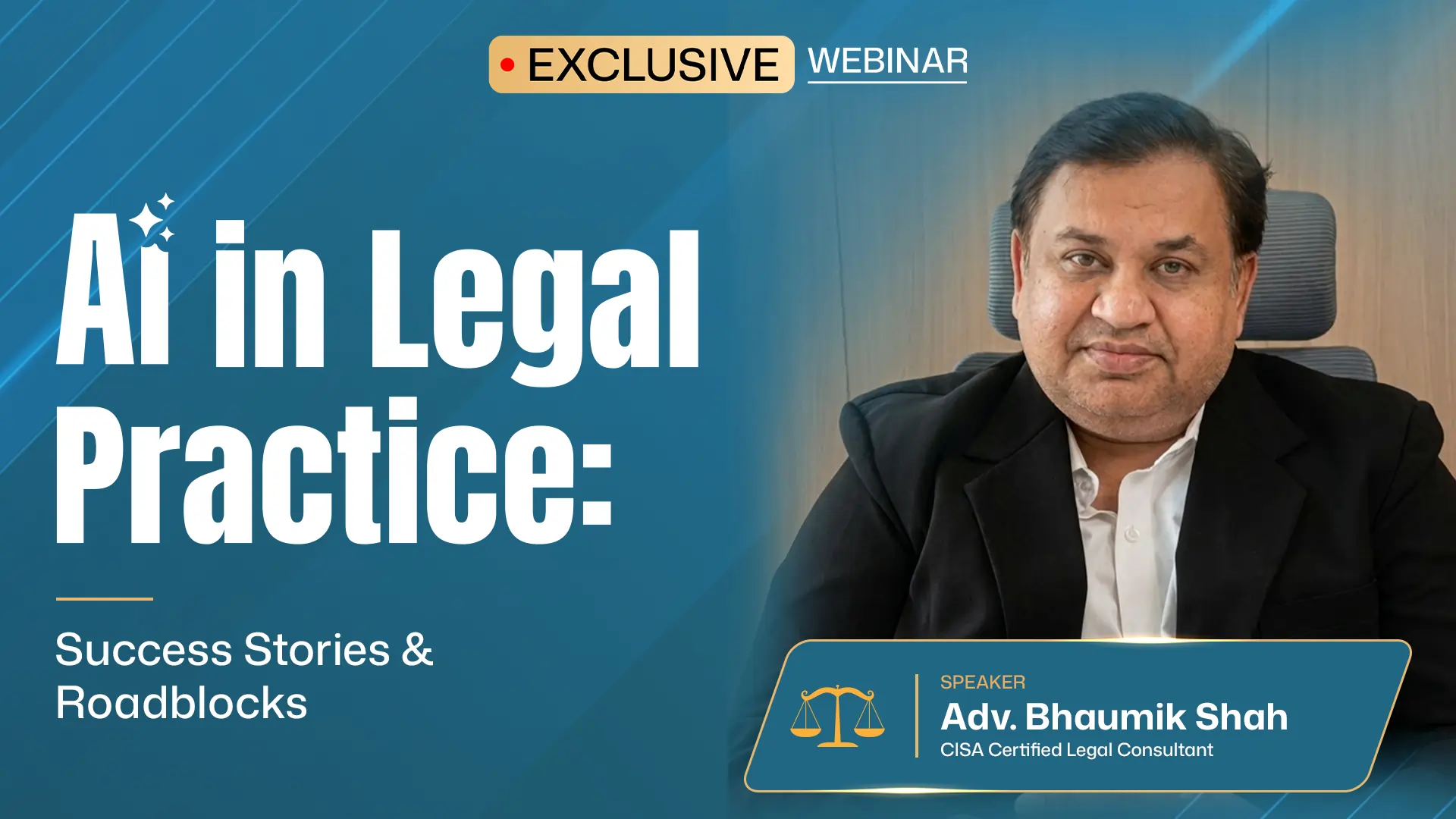
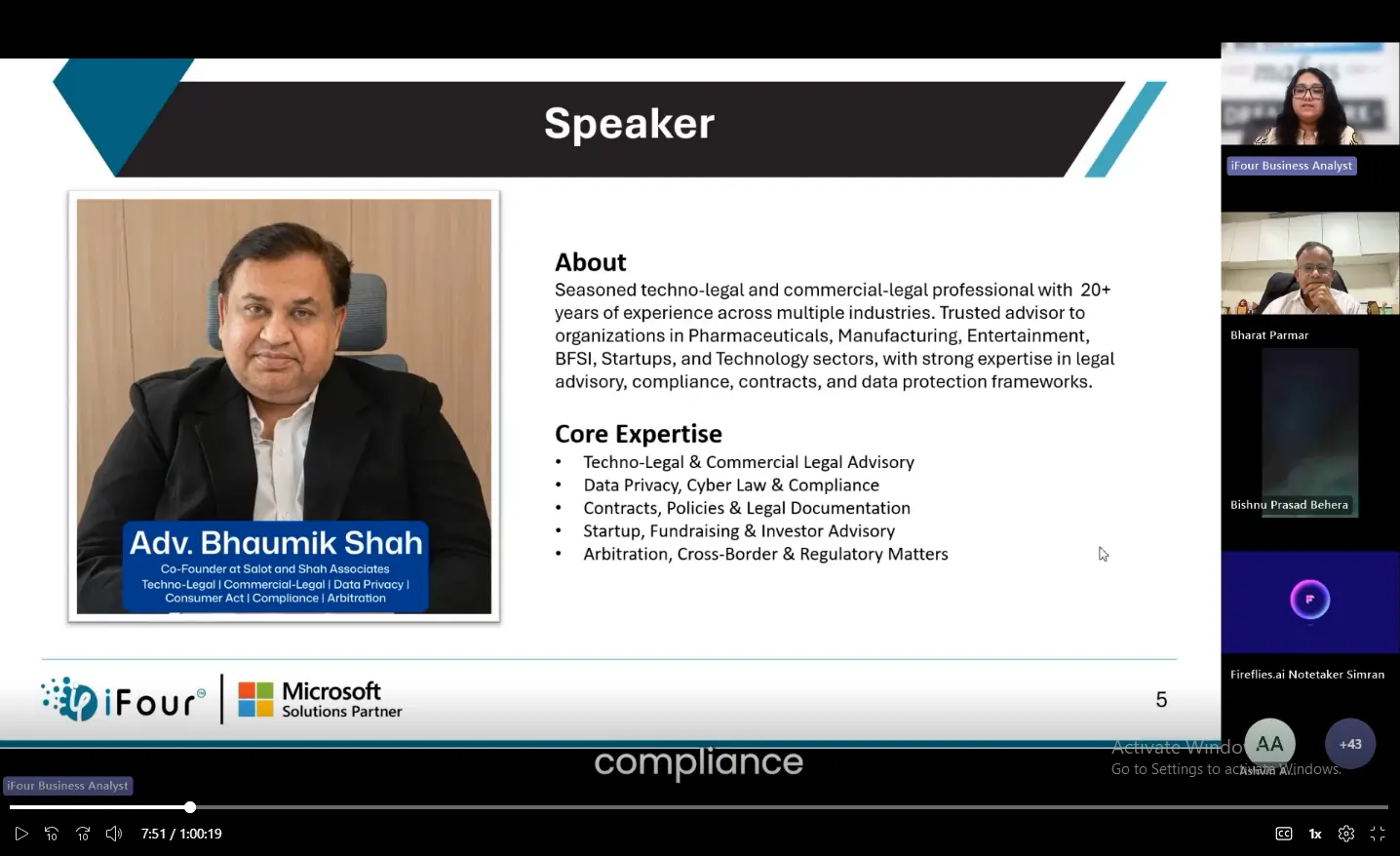
The session kicked off with a friendly atmosphere, as the iFour Business Analyst introduced Bhaumik Shah to the Viewers.
She welcomed everyone and invited each practitioner to talk about their own experiences with AI.
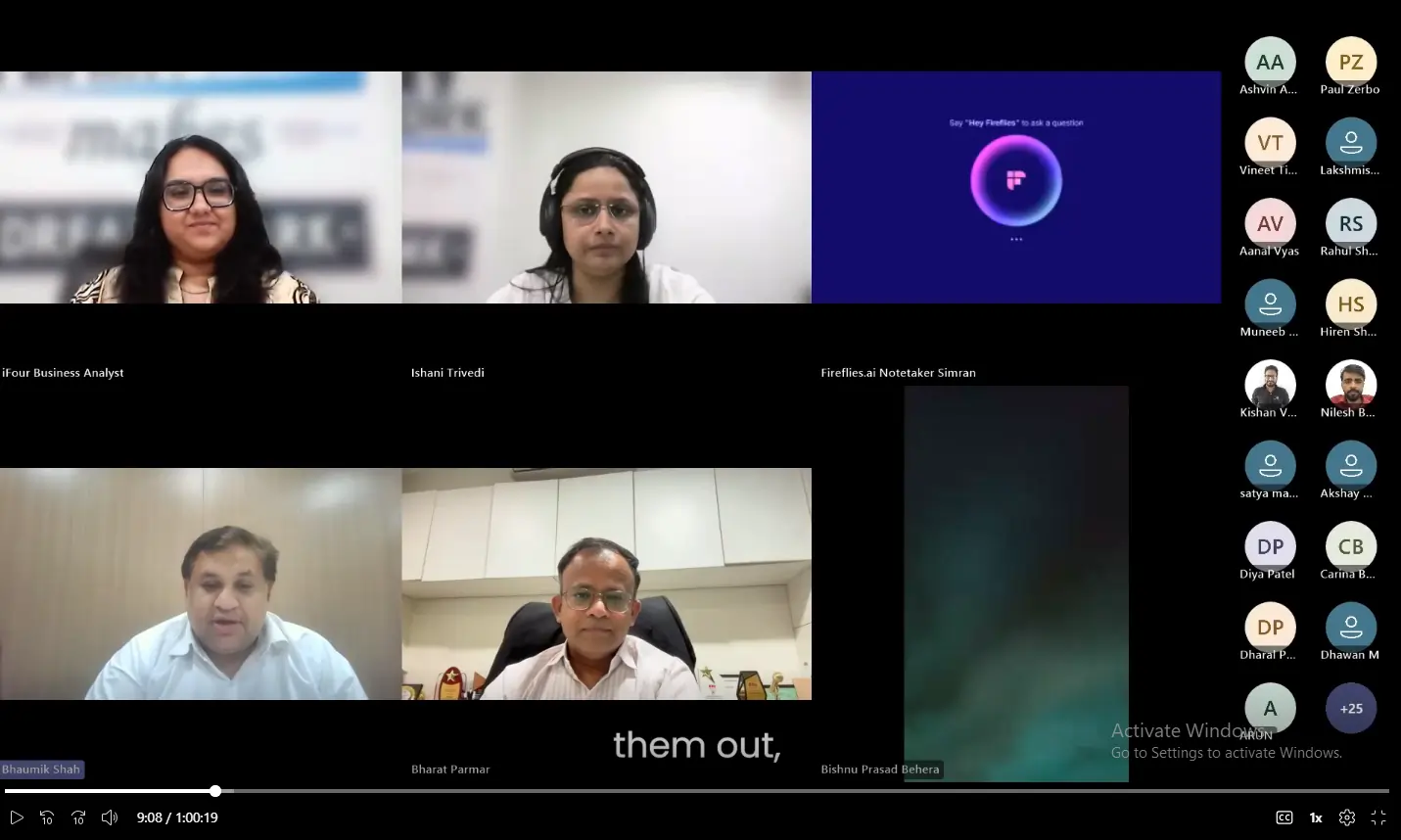
The goal was clear — to understand how much AI had already become a part of their everyday tasks.
Participants started introducing themselves and reflecting on how AI was influencing their legal practice.
Learning how they use AI in law, it increased curiosity about what was coming next.

Vineet Tiwari, a practising lawyer, shared,
I use ChatGPT or Claude AI for case summaries or drafting of some contracts.
Similarly, Paul Zerbo, an information management specialist in a humanitarian organization, mentioned,
I use Microsoft Copilot… just for formulas when I’m working on dashboards.
A particularly insightful moment came from Ashvin Acharya, a senior tax advocate with 45 years of experience, who said,
I draft manually, then try to improve with the help of Claude… especially for citations.
This early exchange clearly showed that AI adoption is already happening—but in fragments.
From an iFour leadership perspective:
The legal industry is not at an adoption stage — it is at a transition stage.
Professionals are experimenting, but standardization and structured usage are still evolving.
Explore our PPT Boost Add-in to create quicker and enhanced Legal presentations
As the session formally began, the iFour team highlighted both sides of AI:
This balanced positioning shaped the entire discussion.
When Bhaumik Shah took over, he acknowledged this duality right away:
We are all learners in AI… but it is important to share what we are experiencing in real practice.
He emphasized that the session would be interactive — and it truly became one.
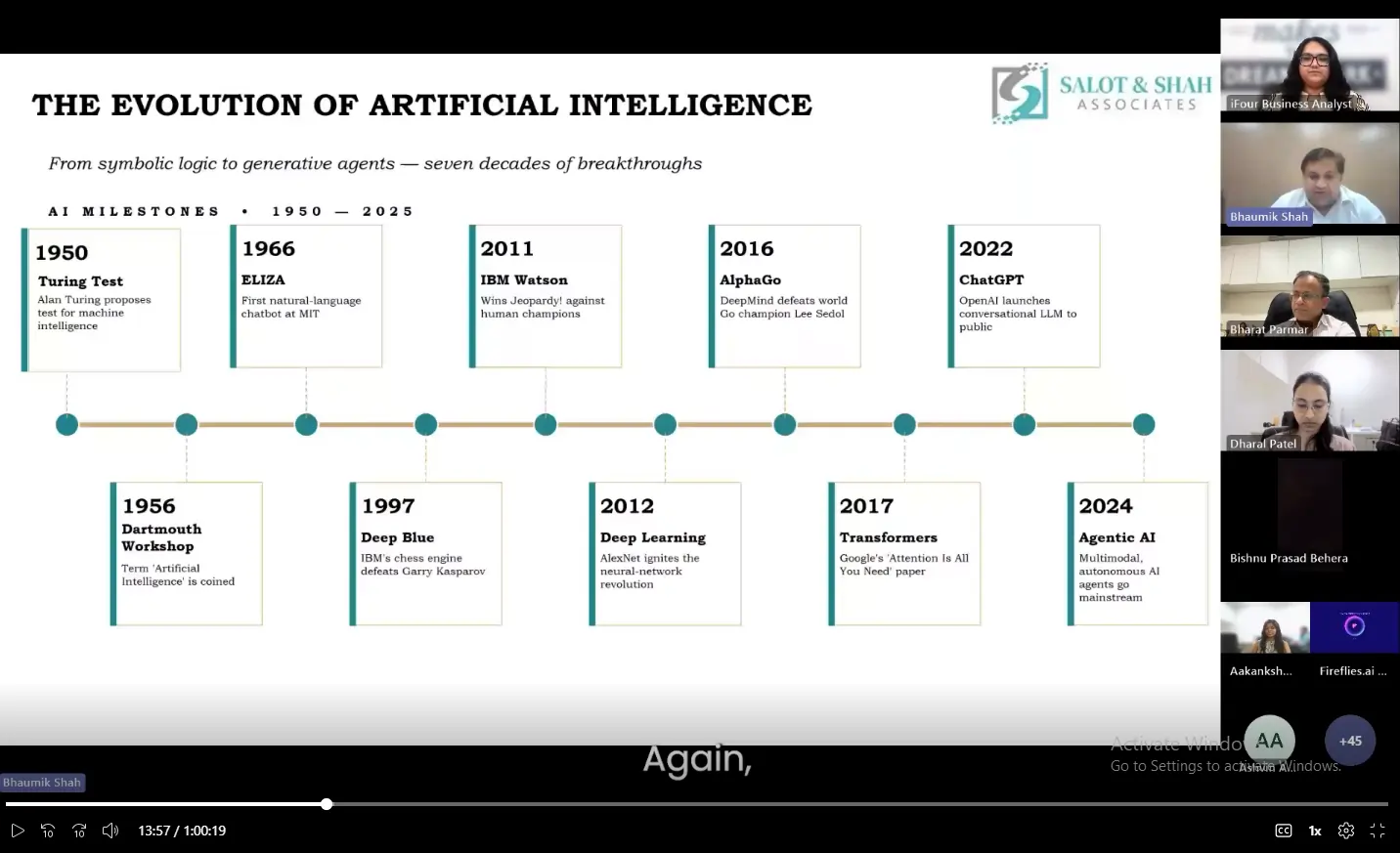
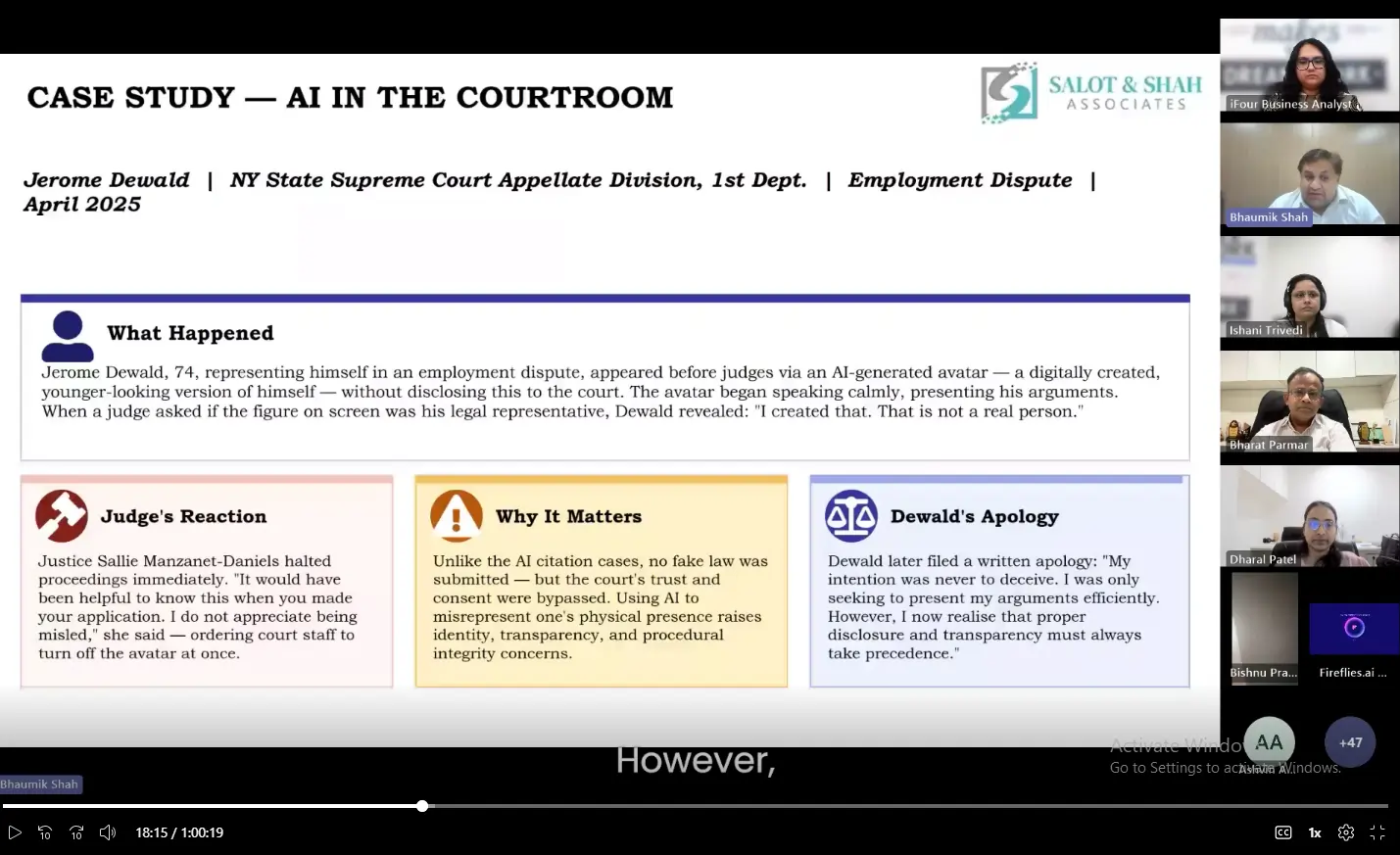
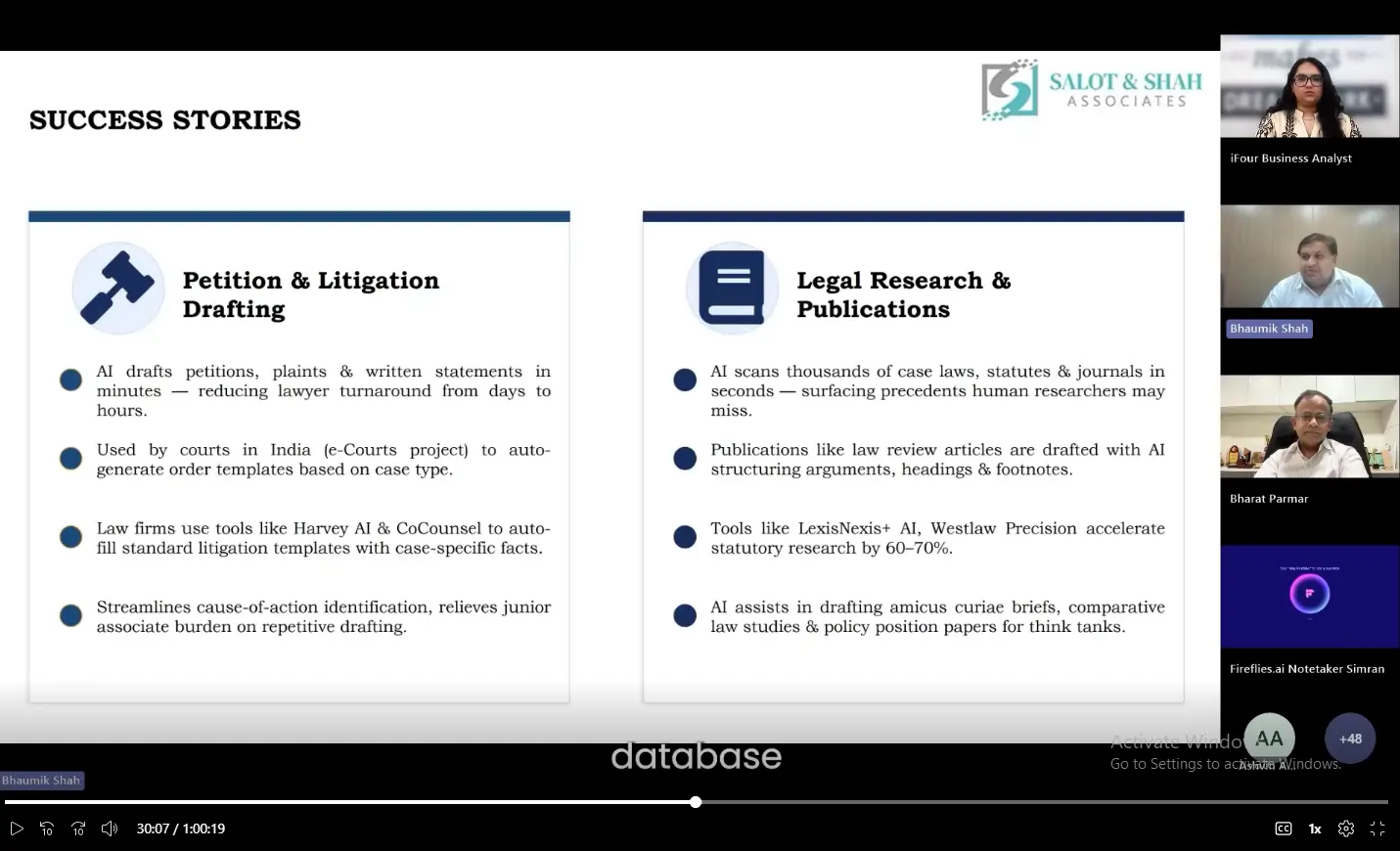
Through AI case studies and examples, Bhaumik Shah explained how AI is already transforming legal work:
However, he didn’t shy away from limitations.
Learn more about Legal Workflow automation here.
As the discussion progressed, Bhaumik Shah addressed one of the most common concerns — how should young lawyers use AI?
Rather than discouraging its use, he leaned into a highly relatable analogy:
Use AI for your first cut draft. Feel that you are an employer and AI is your employee. Let AI give you the first draft… and then you review it, refine it, and submit it.
This perspective reframed AI — not as a threat, but as a productivity layer. It highlighted a balanced approach:
From iFour’s perspective, this idea strongly resonates with how organizations are currently integrating AI:
The most successful AI implementations are not about replacement but augmentation — where AI accelerates output, and human expertise ensures accuracy, compliance, and strategic thinking.
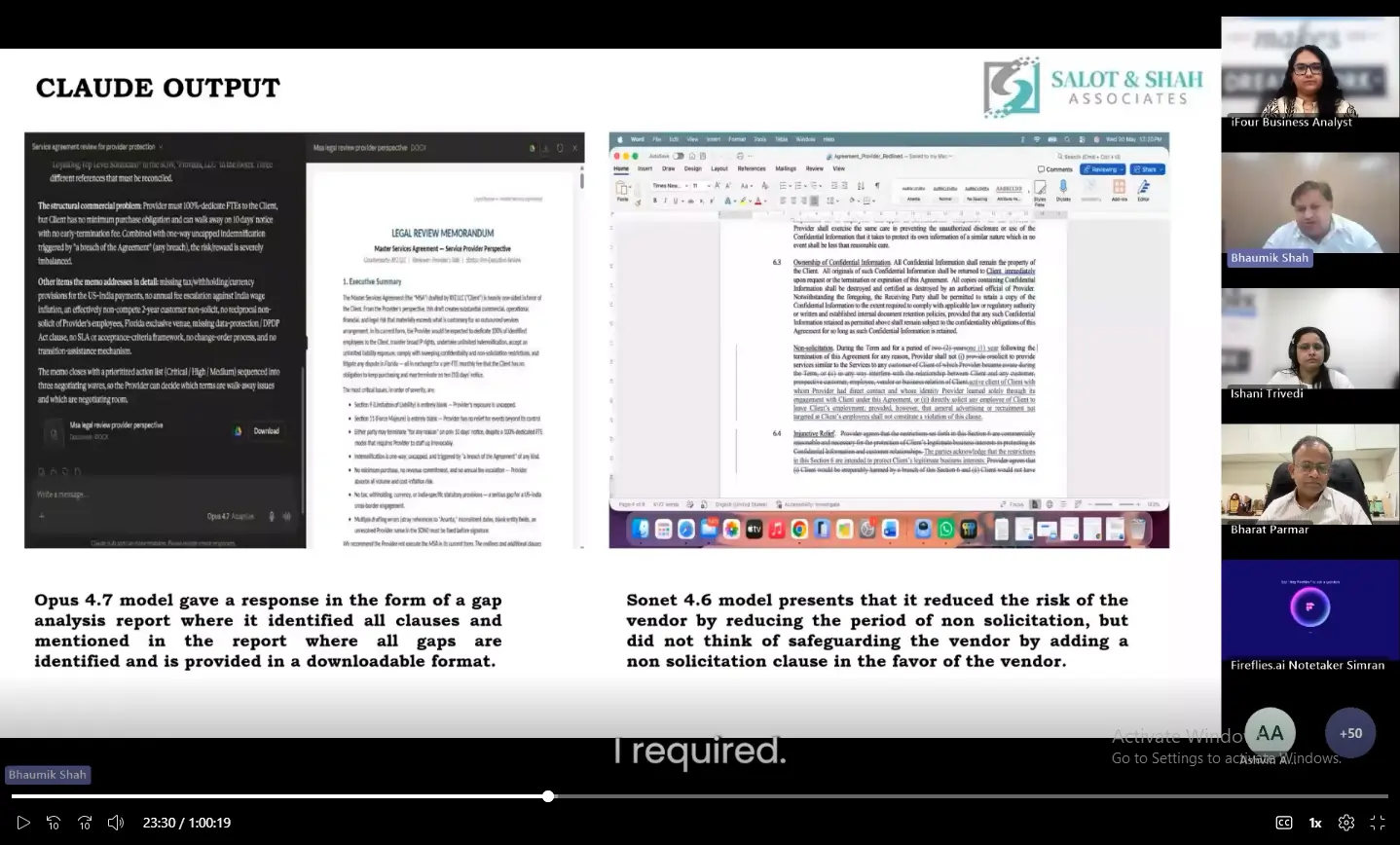
One striking example was his own experiment with AI models, where he shared:
If I have to give marks to AI, I would give 7 out of 10… because while it identified clauses correctly, it failed in context.
This honesty resonated strongly with attendees.
iFour’s insight here is critical:
AI maturity in legal workflows is still contextual. It excels at structure and speed, but struggles with intent, nuance, and legal positioning.
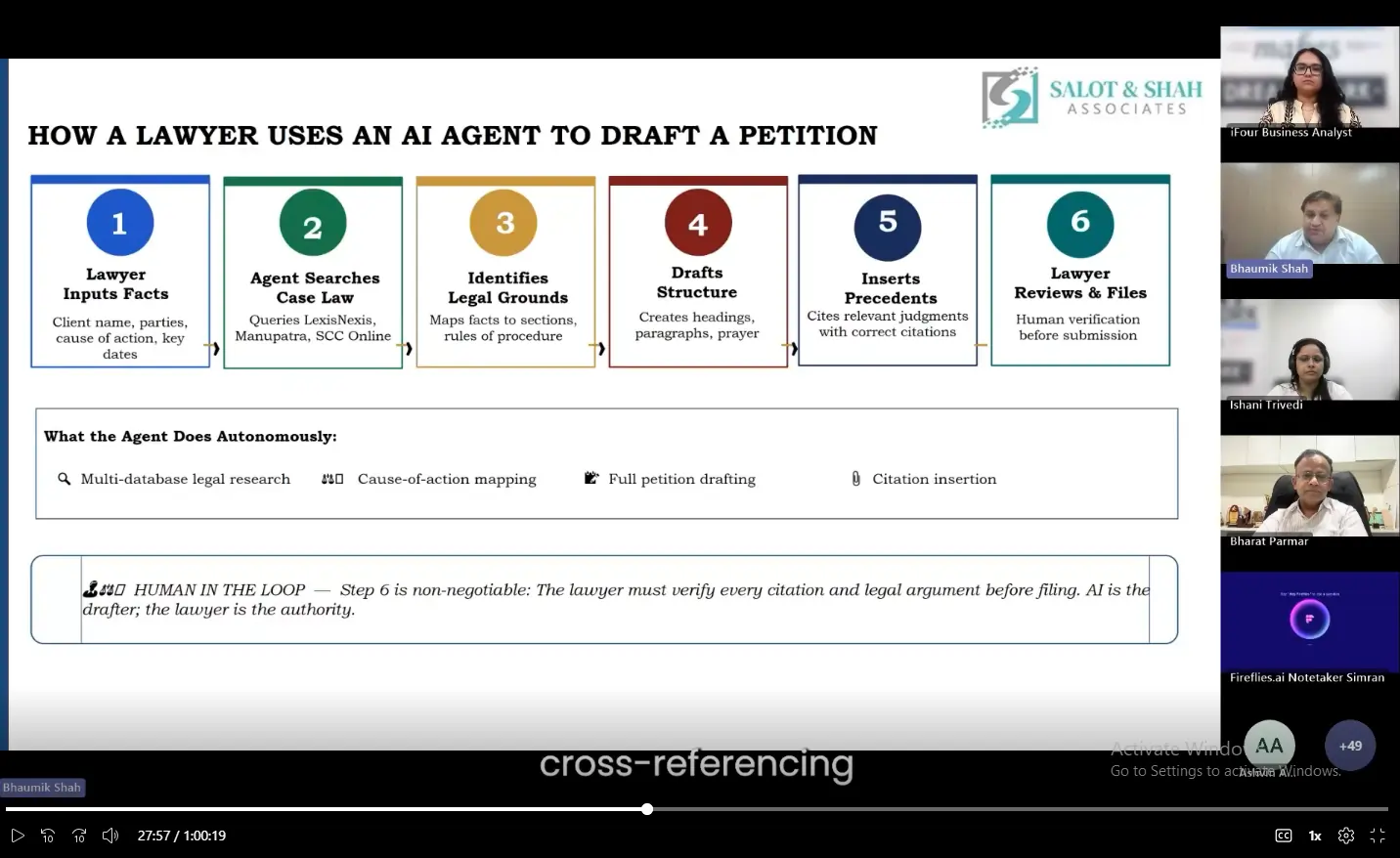
Learn how to build AI agents for your Legal organization. In case of assistance or advance features, get our expert help. Explore our Agentic AI consulting services here.
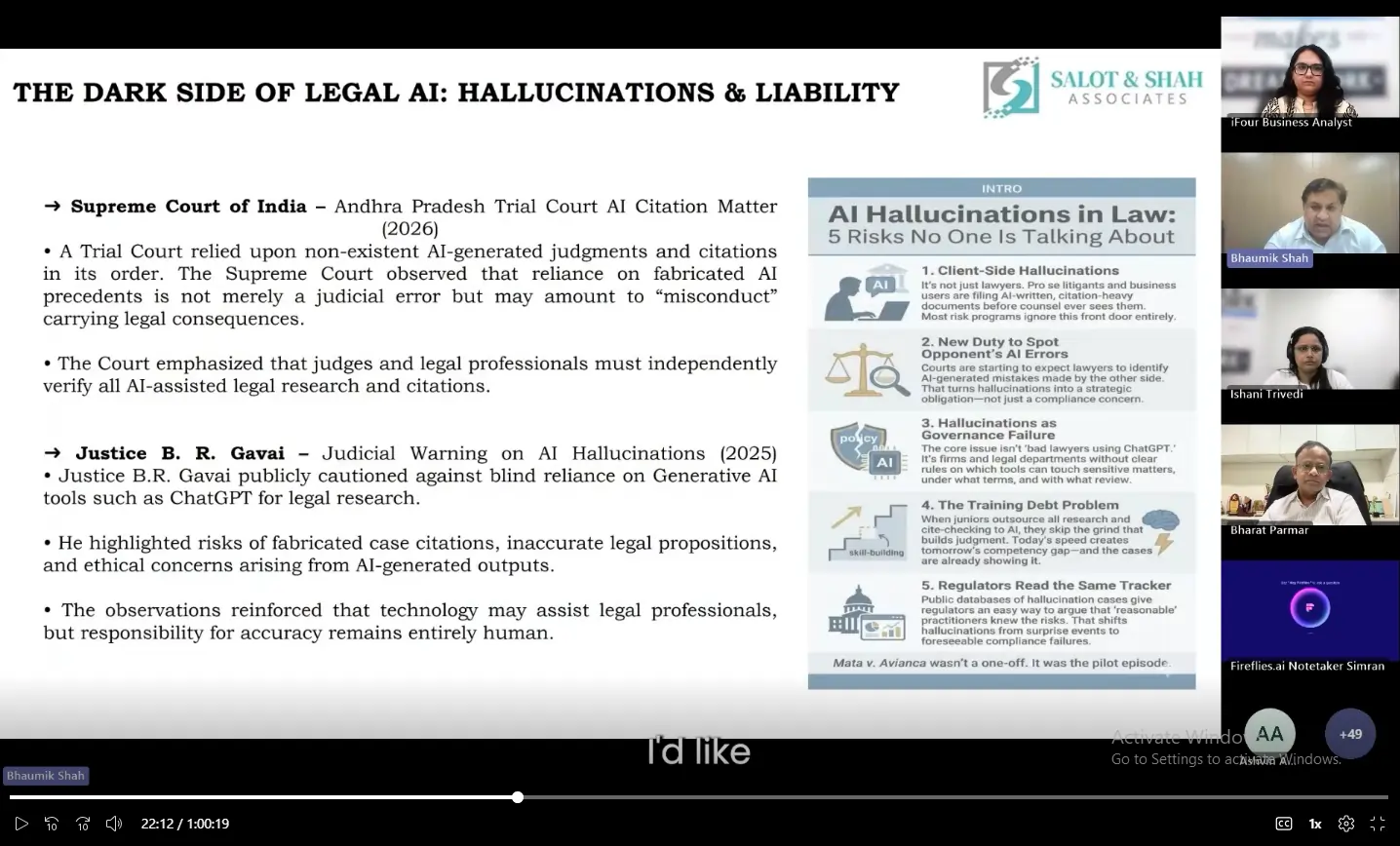
One of the most debated parts of the session centered around AI hallucinations — especially fake legal citations.
This concern was brought forward sharply when Vineet Tiwari, a Legal professional, asked:
If we have to check for hallucination and errors manually, then we are back to square one… what is the use of AI?
This question captured the frustration many legal professionals feel.
Bhaumik Shah acknowledged this concern candidly:
Hallucination is a roadblock… and younger lawyers are failing to understand the importance of correct case precedents.
He suggested a practical path forward:
From an iFour leadership lens:
AI is only as reliable as the data ecosystem it connects to. Standalone AI usage in legal work is risky — integrated AI is the future.
The discussion deepened when Ankit raised a crucial question:
We are uploading client data into AI… how valid is it to use free tools, especially with DPDPA coming into force?
This opened one of the most important segments of the webinar.
Bhaumik Shah explained the legal framework clearly:
Is Legal data secure in AI environments?

He explained this in detail, saying -
“It’s important to first understand how the DPDPA law works.
In simple terms:
When a client shares their details — like phone number, email, or case information—they trust you to use it only for a specific purpose and to keep it safe.
Ideally, you should also take clear consent from clients before using their data, especially if you plan to use AI tools. But in practice, many lawyers don’t do this properly today.
Now, even if you take consent, the client still has rights:
The problem comes when you upload this data into AI tools — especially free ones. If that data gets shared publicly or stored somewhere you can’t control, it becomes a serious risk. Remember, clients share data with you under trust and confidentiality.
If anything goes wrong in the future, the responsibility will fall on the lawyer, not the AI tool.
Also, if a client later asks you to delete their data, you must be able to do it. But with many AI systems, you don’t have full control over where the data goes or whether it can be deleted.
That’s why, for now, it’s safer to be cautious. Until the law becomes clearer and proper rules are in place, it’s better to avoid uploading sensitive client data into such tools.
More clarity is expected as the data protection rules and the Data Protection Board become fully active in the coming years.”
He warned:
“Remember, no system is foolproof… AI absorbs everything. It does not differentiate between sensitive and non-sensitive data.”
His recommendation was practical:
From iFour’s perspective:
AI adoption without governance is a compliance risk. Data security must be the foundation — not an afterthought.
Don’t just explore AI — implement it with confidence. Partner with iFour – a leading Azure AI consulting company and unlock real value from day one.
When questioned directly — “Is the data used by AI tools secure?”— he offered a metaphor that stayed with the audience:
“It’s like an ocean… you never know where the data flows. Even with consent, responsibility lies with the lawyer… because the data is shared under trust.”
While some tools offer privacy controls, the uncertainty remains a key concern.
He also highlighted a major concern:
If data goes into AI and cannot be deleted, it creates a serious legal challenge.
From iFour’s perspective:
The biggest gap today is not AI capability — it is regulatory clarity and enforceability. Organizations must prepare before the law catches up.
A bold question came from Akshay Hooda, who asked:
“Will AI replace lawyers? With AI taking over contract lifecycle work… what should we do to stay relevant?”
This question reflected a widespread concern.
Bhaumik Shah responded with striking honesty:
AI is not going to replace humans. Lawyers who know AI will replace lawyers who don’t.
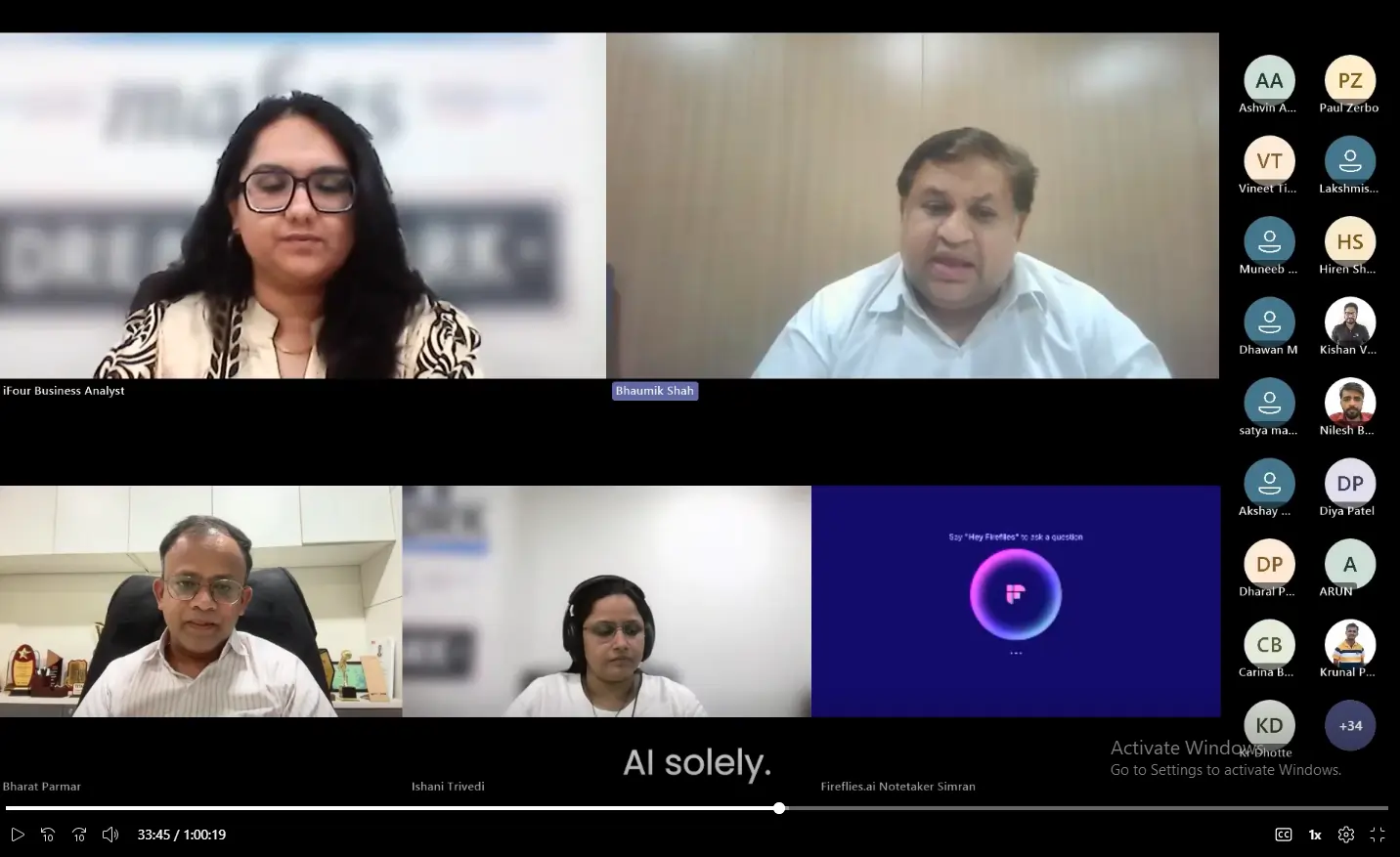
He says:
“See, I'll be very honest. None of the service sectors is right now away from the fear of AI. Let me put it very blank.
To be honest, everyone in the service industry is worried about AI right now—whether it’s HR, developers, or lawyers. Everyone is unsure about what the future holds because AI is changing things very quickly.
The only real solution is to keep upgrading your skills.
Even for someone like me, a 40-year-old lawyer with years of experience, adapting to new technology can be challenging.
But good part is I have got a lovely team of lawyers who are very young and they are very fast adapting to the technology. I am learning lots of things from them.
And if I have to be in business, I have to be fast evolving.
To talk more about AI, there’s one important truth I strongly believe in:
AI will not replace humans — but people who know how to use AI will replace those who don’t.
This applies to everyone, including lawyers and employees in any field. The key is to stay ahead and keep learning.
Think of it like this: if two people are running from a lion, you don’t need to run faster than the lion — you just need to run faster than the other person. In the same way, in the AI world, the one who adapts faster will move ahead.”
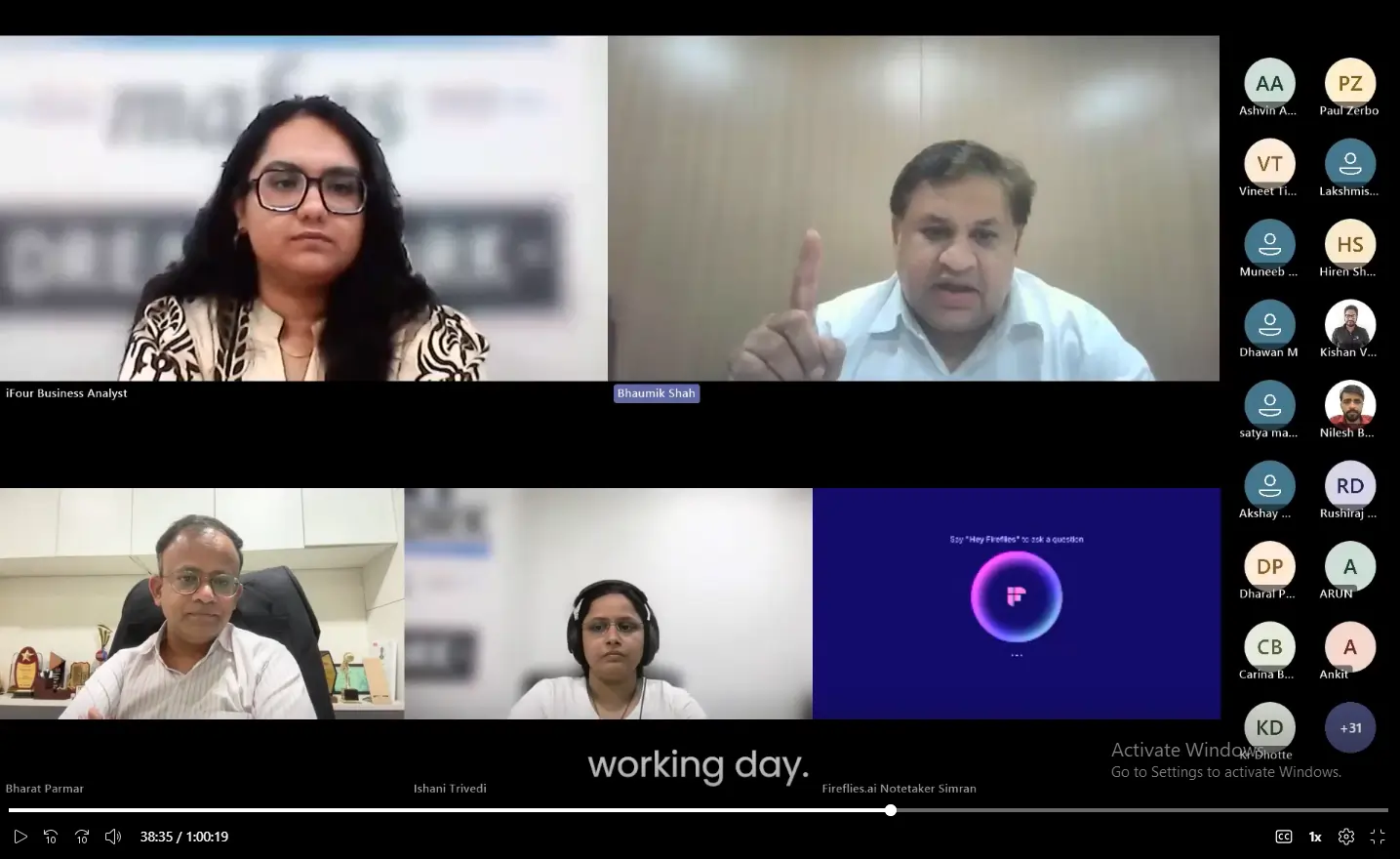
He emphasized one clear strategy:
From iFour’s viewpoint:
The future of legal careers is not threatened—it is being redefined. The differentiator will be AI awareness, not resistance.
In one of the more philosophical moments, Jaishree asked:
“Do you see AI helping in final judgment processes… for judges or juries?”
Bhaumik Shah responded thoughtfully:
AI can provide insights... but legal decisions are based on unique facts and interpretations. Predictive judgment is still far away.
He compared it to medical diagnostics:
He compared it to medical diagnostics:
When asked about legal AI tools, Bhaumik Shah shared candidly:
“I have been using a combination of ChatGPT, Gemini, and Claude… but primarily Claude for legal work.”
He also pointed out that:
Globally, tools like Harvey AI are gaining traction
In India, platforms like Claude for Legal are showing promise
Later in the session, Vineet Tiwari asked:
“How can young lawyers balance AI use with human effort?”
Bhaumik Shah offered one of the most practical takeaways of the webinar:
Use AI as your first draft… think of AI as your employee. You review, refine, and finalize.
This simple analogy resonated strongly across experience levels.
From iFour’s standpoint:
The winning model is ‘AI-first draft, human final judgment.’ That is how efficiency and accuracy will coexist.
The session closed on a high-impact note when Jaishree asked:
“Yeah, hi. Basically, my question is more generic, like considering that AI has the capability to actually analyze large amounts of data and facts. Do you see that as a scope for it to be helping the final judgment process of the legal system? I mean, there's more generic questions, but in many of the medical spheres, they are already using it to arrive at final analysis based on data. So in one sense, legal is also at the end of it, data. Okay. So do you see there is a scope for it to be helping in the final judgment process in your court?”
“What should next-generation lawyers focus on… and who owns responsibility when data is lost in AI systems?”
Based on his extensive experience, Bhaumik Shah clarifies -
judgments on the same issue.
For example, I recently had a client who wanted to file a defamation case because someone posted something negative about them on social media. But at the same time, people also have the right to freedom of speech, which allows them to share their opinions or feedback online.
Because of this, courts don’t always give the same decision. In some cases, courts have asked to remove such posts, while in many others, they have said it is not defamation. So, there are always two sides to the same issue.
From my experience, every case is different. Each one has its own facts and evidence. That’s why judges carefully study each situation before making a decision. AI can help by showing past cases and examples, but it cannot fully decide what is right in every situation.
Prediction in law is still not fully reliable. To explain this simply—think of a medical test like a PET scan. Most of the time, it may correctly identify a serious disease like cancer. But in rare cases, the same result could actually be something else, like tuberculosis.
In the same way, AI can be accurate most of the time, but it can still be wrong in some cases. So, we cannot depend on it completely.
When it comes to responsibility, the lawyer is always responsible for the data they use. If client data is shared with AI tools and something goes wrong, the accountability remains with the lawyer.”
What I mean in short is:
When asked to share his thoughts on future lawyers, Bhaumik Shah responded clearly on future lawyers & data accountability.
On future lawyers:
Litigation will remain human… courtroom arguments require spontaneity and experience.
On data responsibility:
“Is the data used by AI tools secure?”— This has been the main question among legal individuals today:
“It’s like an ocean… you never know where the data flows. Even with consent, responsibility lies with the lawyer… because the data is shared under trust.”
While some tools offer privacy controls, the uncertainty remains a key concern.
He also highlighted a major concern:
If data goes into AI and cannot be deleted, it creates a serious legal challenge.
From iFour’s perspective:
The biggest gap today is not AI capability—it is regulatory clarity and enforceability. Organizations must prepare before the law catches up.
Another participant asked whether AI would eventually take over mechanical work.
Bhaumik Shah responded affirmatively:
“AI is going to do a lot of clerical work… standard formats, filing objections… a lot of automation will happen.”
This reinforced the broader narrative:
From an iFour leadership perspective:
This is not a loss of roles but a redefinition of roles. The value of a lawyer will increasingly lie in interpretation, strategy, and advocacy — not repetition.
The session concluded with Bharat Parmar from iFour appreciating the practical insights shared:
“It is always good to hear firsthand experiences… this was truly interactive.”
And indeed, that defined the webinar.
This wasn’t just a discussion about AI—it was a reality check for the legal industry.
Key takeaways:
And most importantly:
AI will not replace lawyers — but it will separate those who adapt from those who don’t.