We use cookies to improve your experience on our site. Please accept cookies for optimal performance.


601 & 612, The Times square Arcade, Near Baghban party plot, Thaltej - Shilaj Road, Thaltej, Ahmedabad, Gujarat - 380059
Ahmedabad
June 17 2026
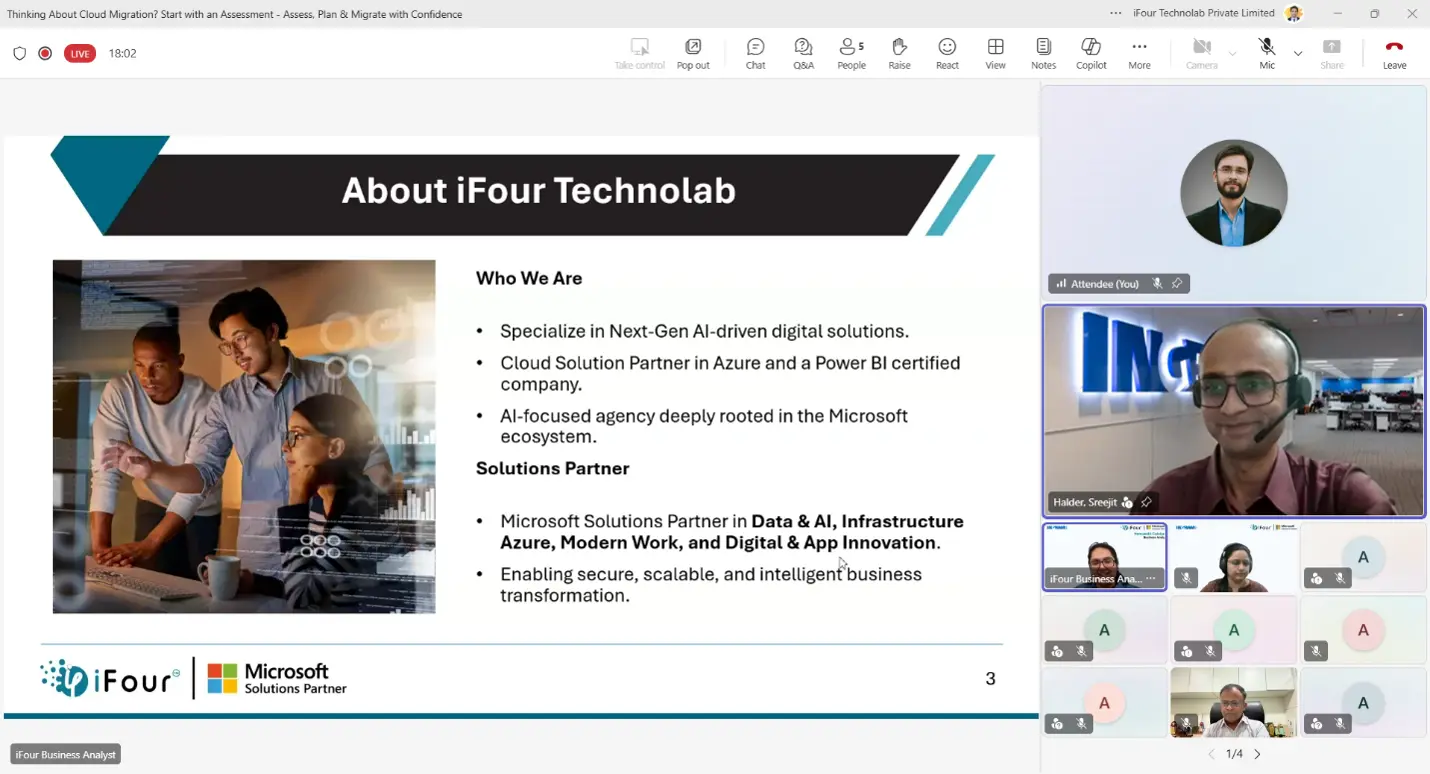
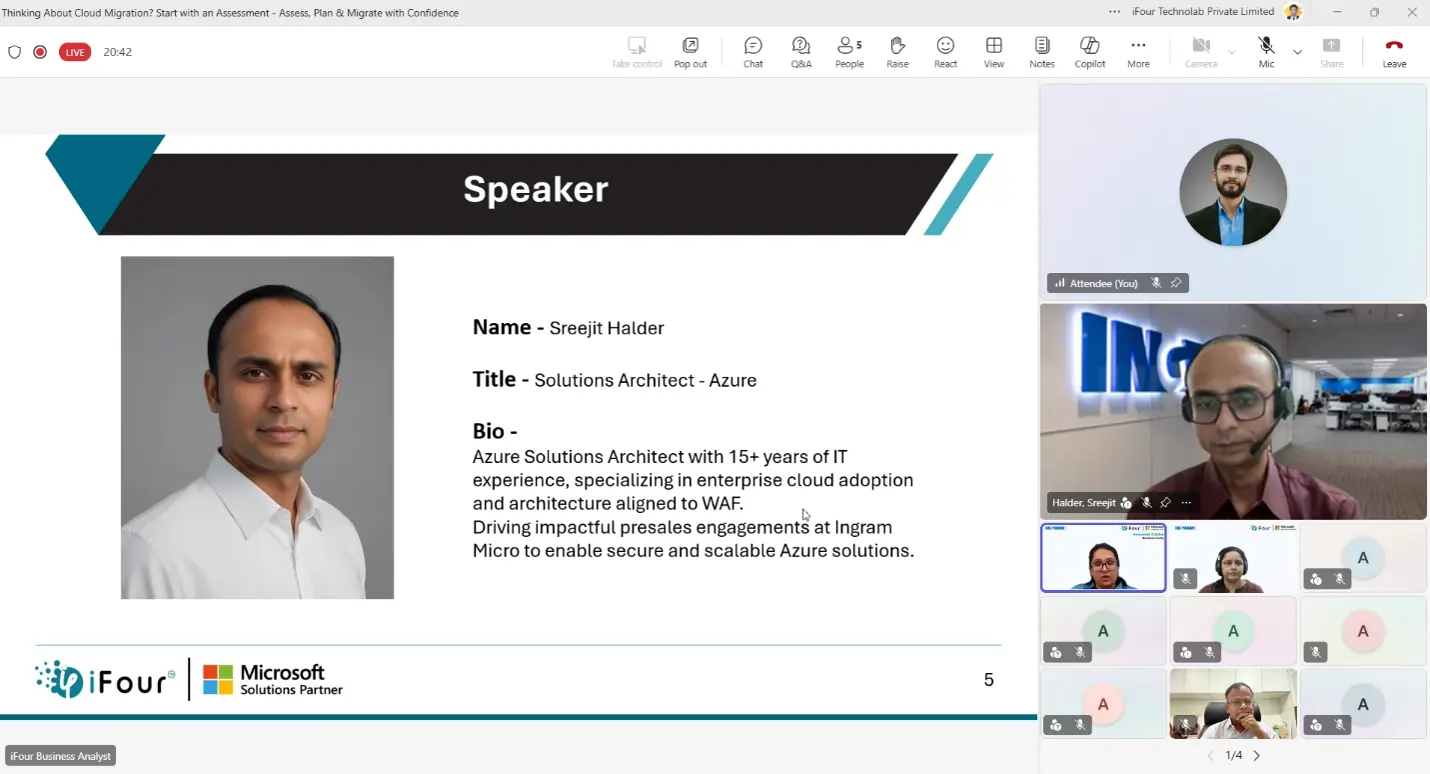
So, recently iFour hosted an exclusive webinar on Cloud Migration Assessment and Strategy, led by Sreejit Halder, Azure Solutions Architect with 15+ years of experience.
The session was engaging, interactive and contributed greatly to the Cloud focus defined by this Azure cloud consulting firm .
The webinar began with a brief introduction of the joined participants, then a grounded conversation on cloud migration.
The fascinating thing is that it didn’t feel like a technical talk, but more like a shared discussion about real challenges organisations are facing today.
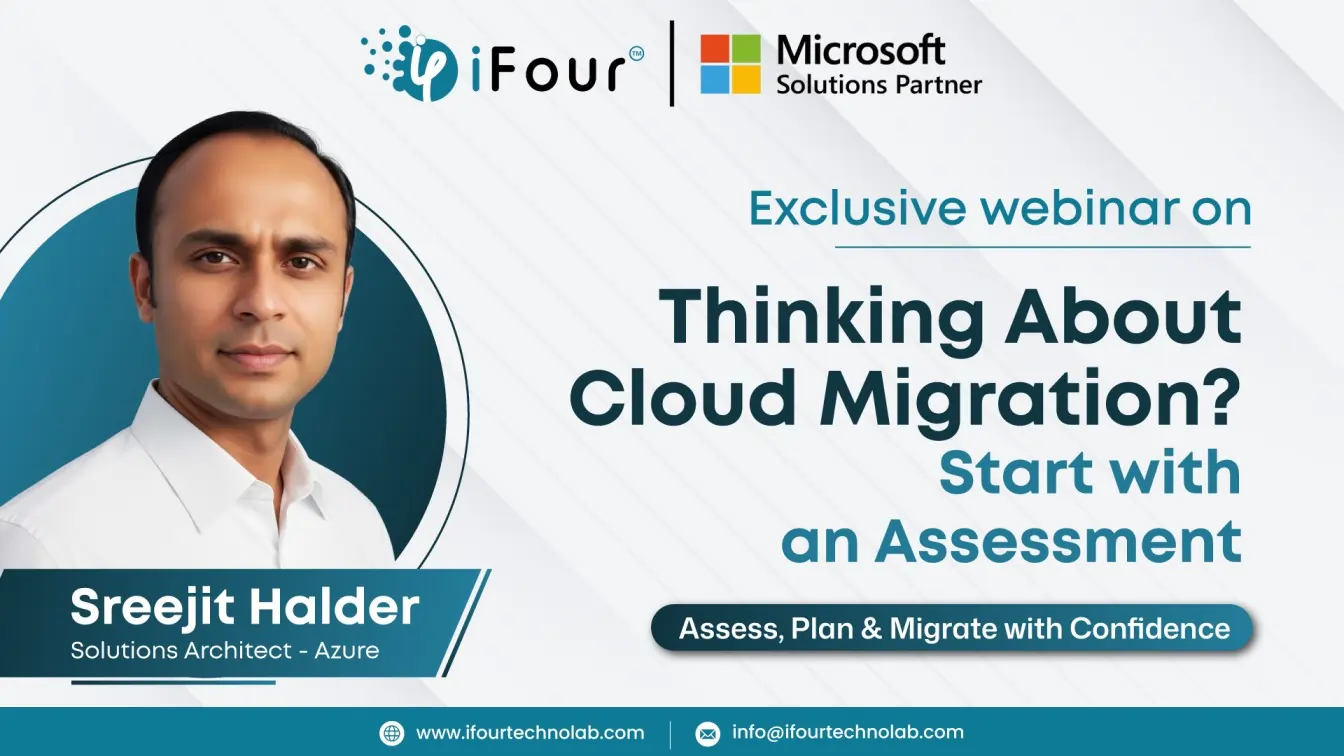
Sreejit Halder took over the session and opened with a clear message - don’t rush into migration. Start with the right assessment and make informed decisions.
From the start, it was clear the audience wasn’t new to the cloud. They were already working on it, but struggling with the complexity.
The conversation quickly moved past basics and into real concerns - fragmented systems, unclear costs, and long-term manageability.
One participant from the retail domain put it simply:
“Almost everything that we are running is in cloud, but those are different solutions by different providers. There is no single cloud where we get all our data integrated.”
That comment shaped the direction of the session.
The idea was clear - moving to the cloud without a plan doesn’t simplify things, it creates silos.
In response, Sreejit explained that migration should not be about moving workloads blindly. It should focus on bringing systems together, creating visibility, and helping teams make better decisions with their data .
Cost and ROI came up next, as expected. Another attendee raised a practical concern:
“Right now, we are not incurring any expense on infrastructure beyond the license fees. Is it worthwhile? We need to look at the return on investment.”
Instead of dismissing this, the response from iFour leadership reframed the discussion.
Cloud was positioned not as an extra cost, but as a different way of managing spending - moving from fixed infrastructure to flexible, usage-based models.
The key point was simple: cloud only delivers value when it is aligned with business goals.
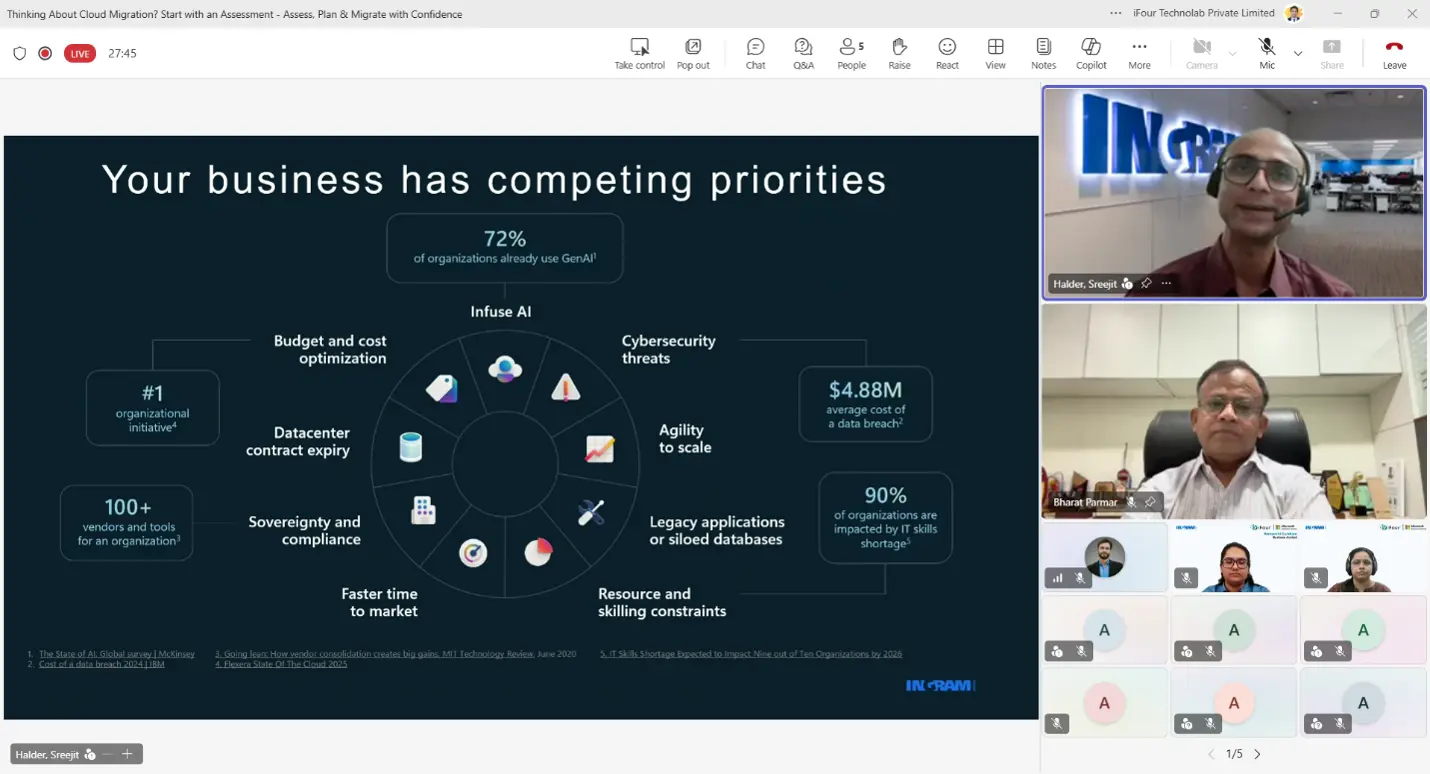
As the session went deeper, questions became more specific and grounded.
Kasif, a cloud solution expert, asked:
“How can we allocate the right budget and ensure our infrastructure management is efficient and secure?”
Sreejit explained that cloud platforms like Azure provide built-in ways to track usage, control costs, and forecast spend. He also pointed out that security can be extended from existing systems into the cloud, rather than rebuilt from scratch.
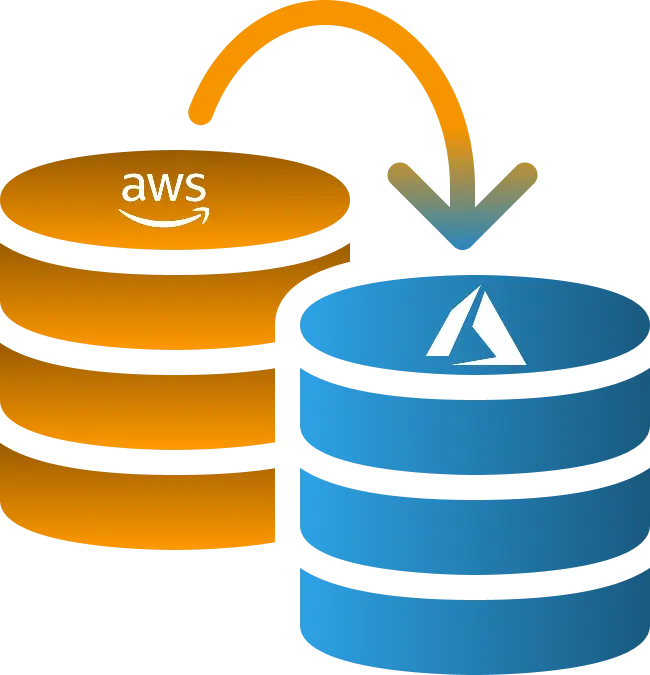
Also Read: Why enterprises migrate from AWS to Azure (17 Reasons)
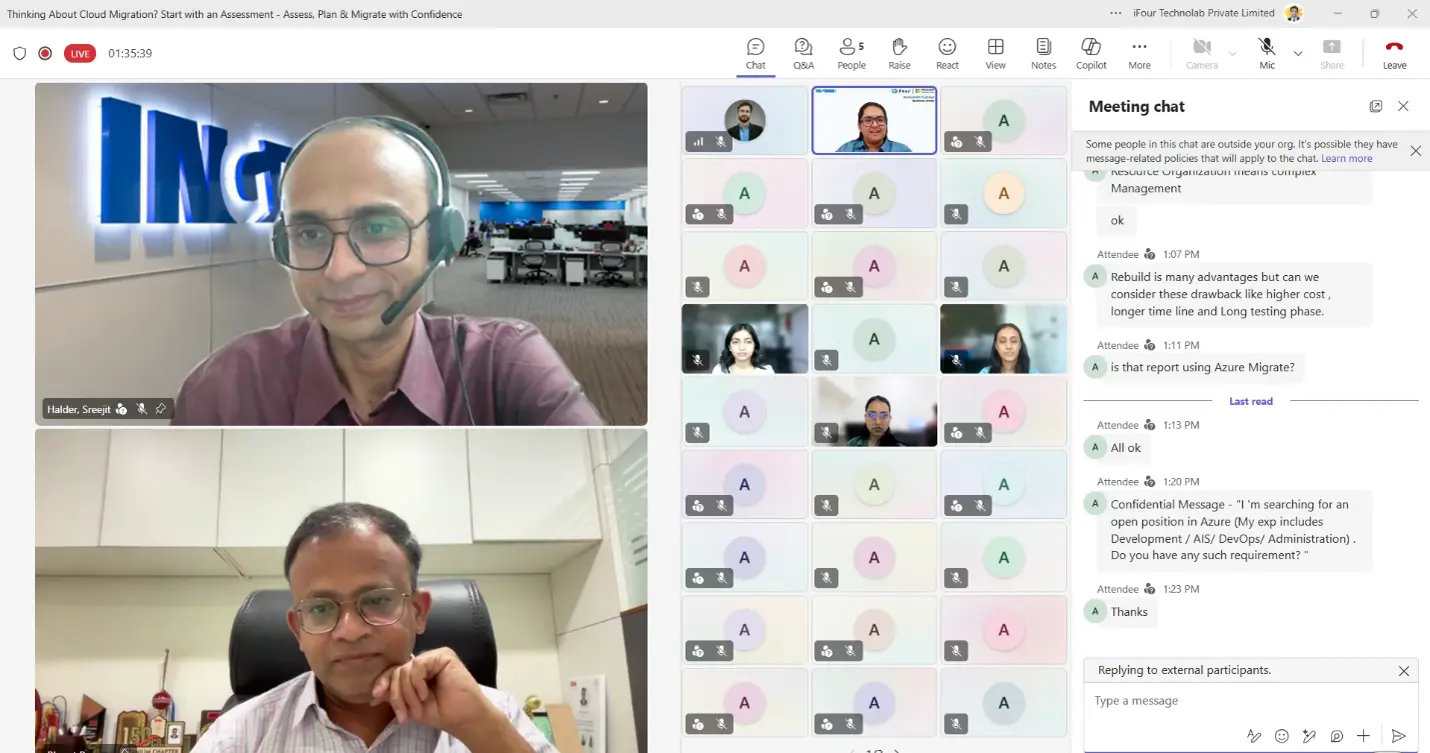
The message here was clear - control doesn’t go away in the cloud, it just takes a different form.
Nandu raised a concern that many organizations share:
“The guidelines say financial data must stay in India. How do we ensure data residency and privacy?”
This led to a more direct discussion. The response was clear - cloud platforms provide regional controls and compliance frameworks, but responsibility still lies with the organization.
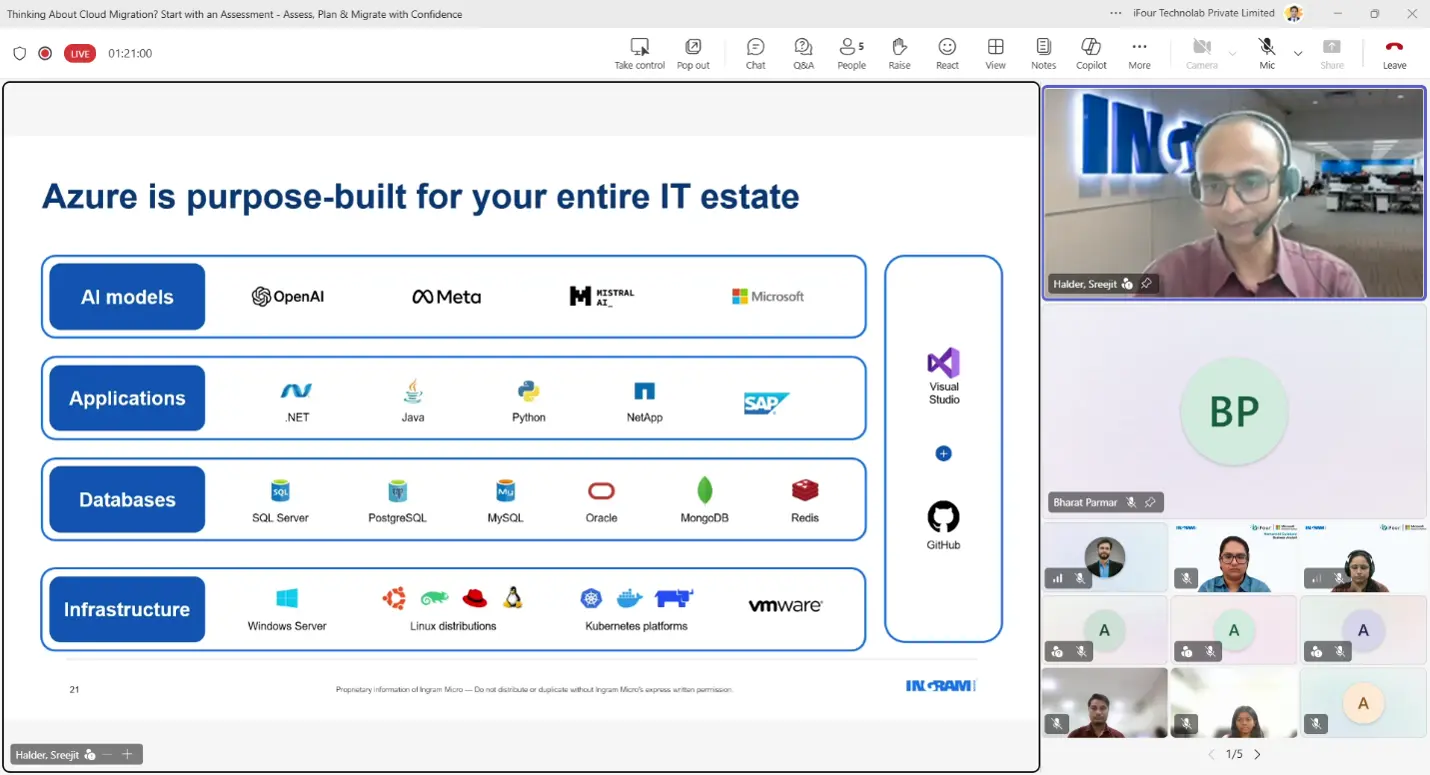
As iFour leadership put it, cloud enables compliance, but ownership of data governance always stays with the business.
Another participant brought up the complexity of working across multiple cloud systems:
“We use AWS, Azure, hybrid solutions... Is it possible to have a single pane of glass?”
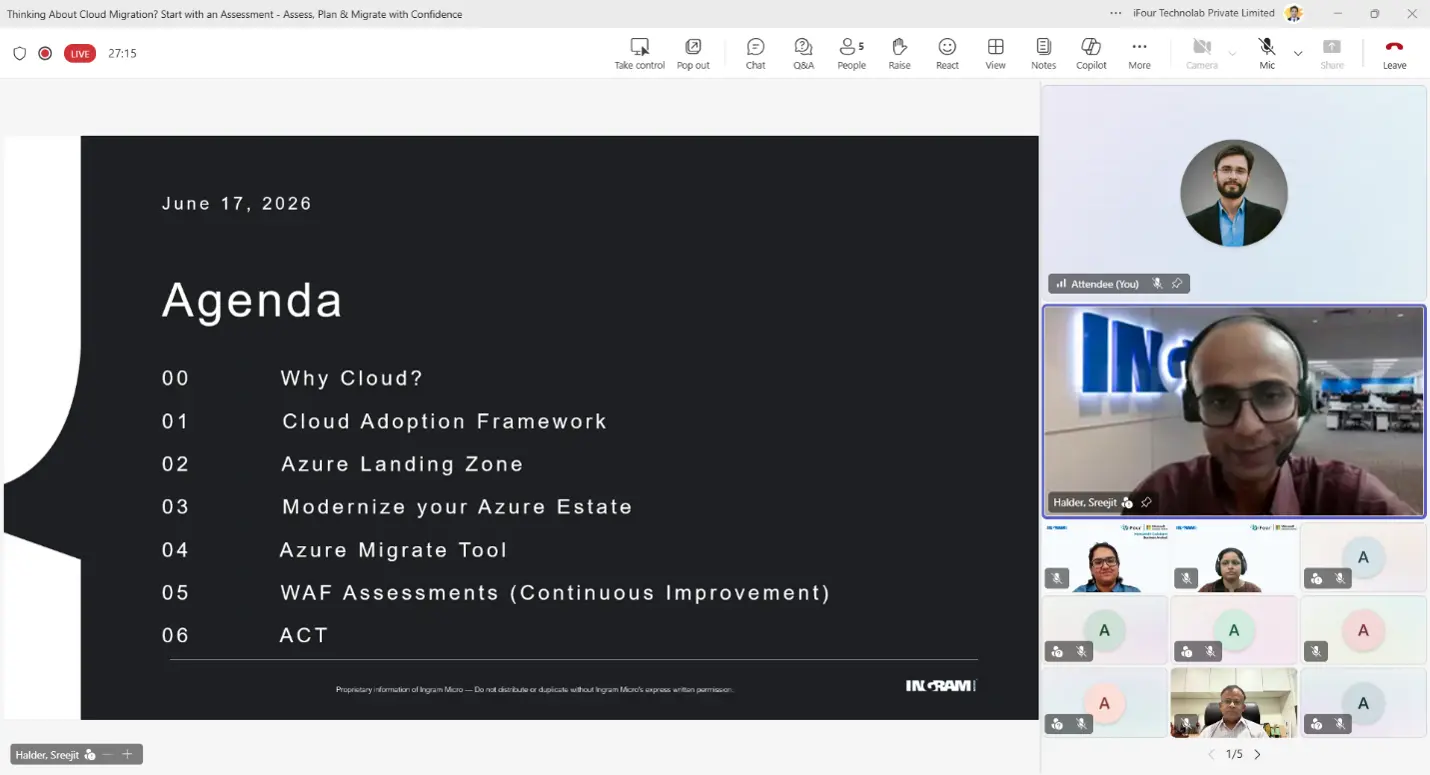
This shifted the conversation toward architecture. The idea of a “landing zone” was introduced as a practical approach to bring structure and visibility across different environments.
Instead of forcing everything into one system, the focus is on creating a unified way to manage it.
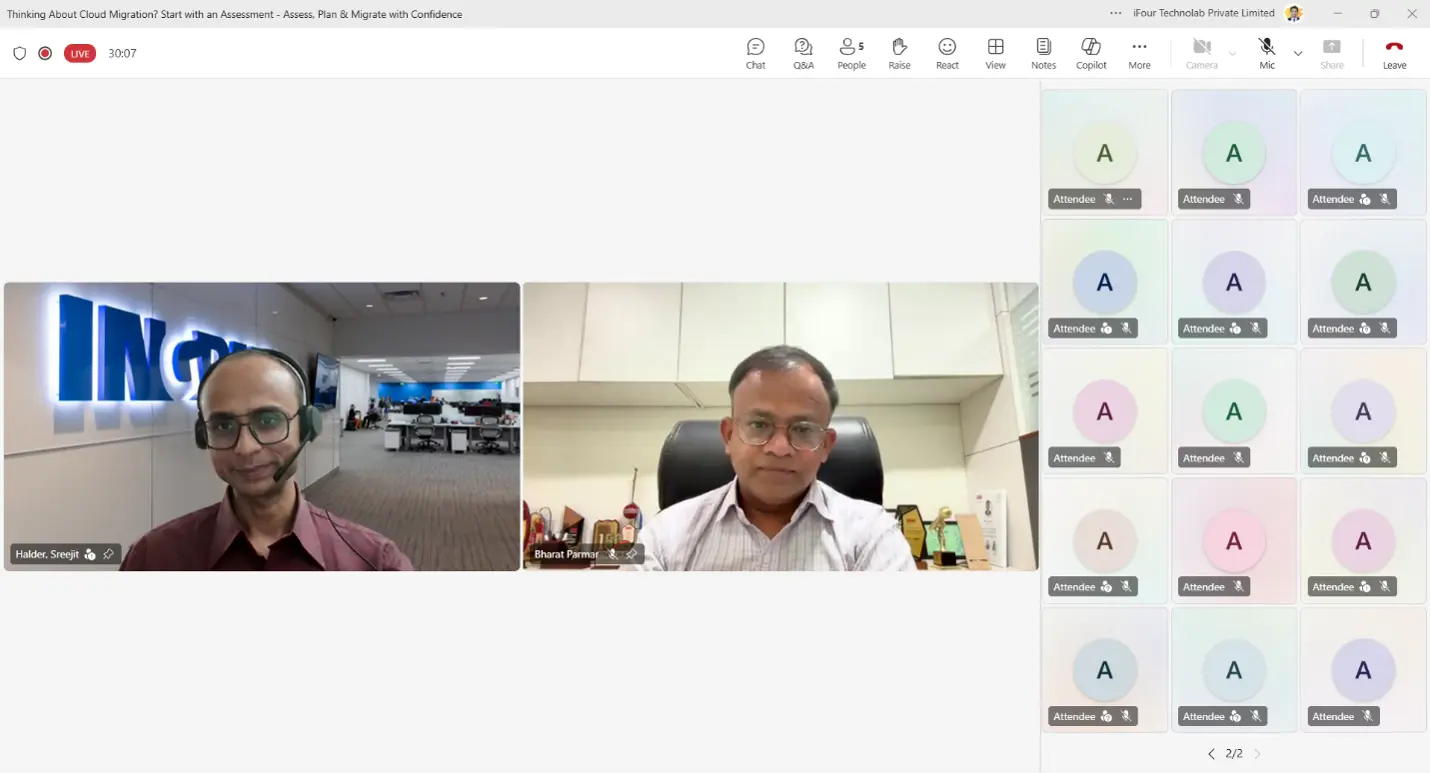
What stood out in the session wasn’t just the answers, but the way the discussion was framed. The iFour team consistently brought the focus back to intent. Cloud migration was described not as a one-time move, but as a long-term shift in how organizations operate.
There was also an underlying point that came through clearly - moving fast is not the goal. Moving with clarity is.
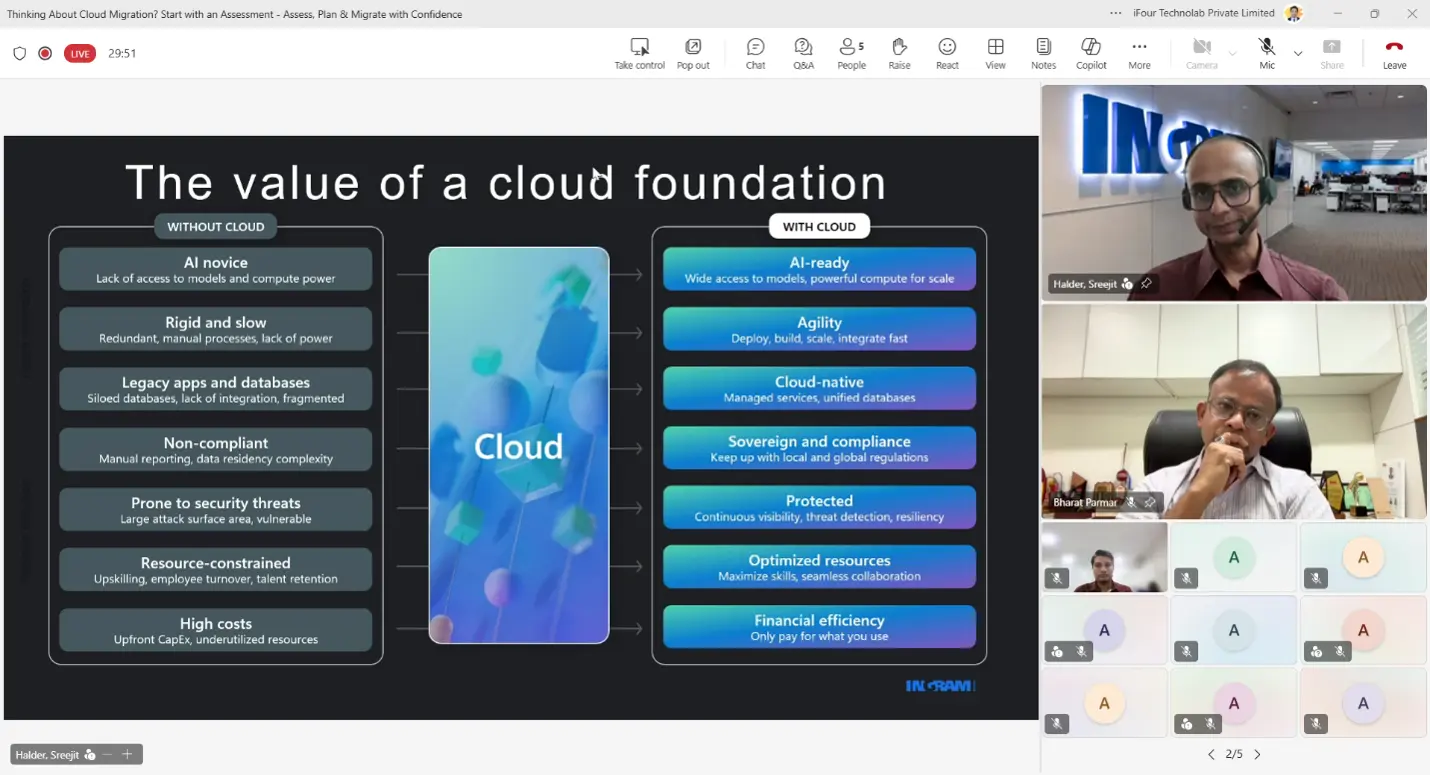
As the session progressed, the nature of questions changed. Early concerns about cost and feasibility turned into discussions about execution and next steps.
One participant captured this shift well:
“We’re comfortable with the idea that modernization means change - and that’s why we value assessments. Let’s act, but let’s act with confidence.”
By the end, the direction was clear. Assessment was no longer just a starting step - it felt like the foundation for everything that follows.
The closing message from iFour reinforced this. They positioned themselves not just as a Azure managed service provider , but as a partner in the journey - from understanding current systems to planning and executing migration in a way that is practical, secure, and aligned with business needs.
What the audience took away wasn’t just technical knowledge. It was a clearer way to approach cloud decisions - with structure, confidence, and purpose.
The session didn’t push migration. It helped people get ready for it.
Ready to modernize your IT infrastructure? Partner with iFour and make your move to Azure effortless, faster, safer, and smarter.

A passionate Technical writer and an SEO freak working as a Content Development Manager at iFour Technolab, USA. With extensive experience in IT, Services, and Product sectors, I relish writing about technology and love sharing exceptional insights on various platforms. I believe in constant learning and am passionate about being better every day.